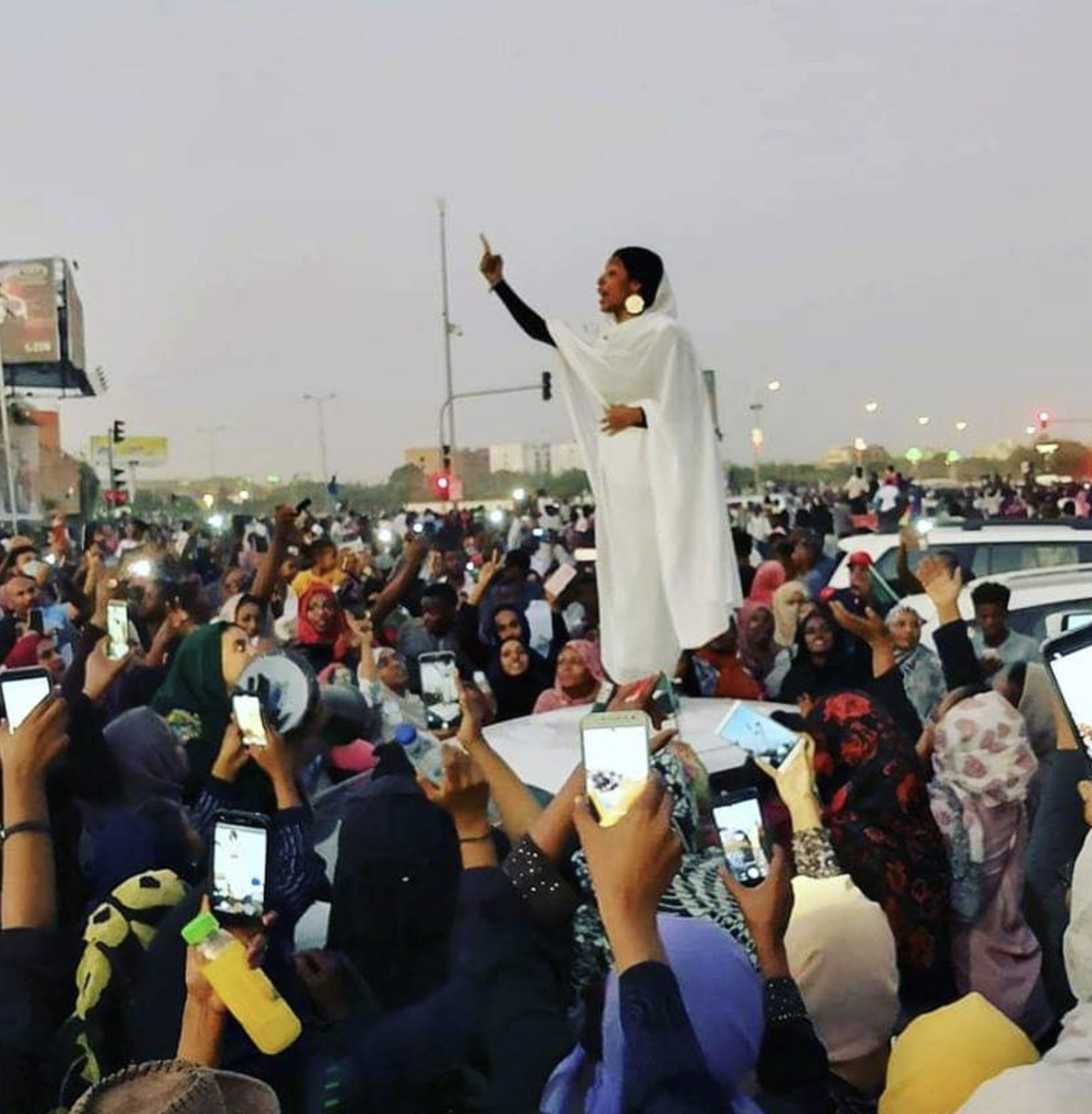
SUDAN FROM BELOW
a 2026 teach in with The Dugout at Rhizome House
In this teach-in, we break down Sudan’s political history from independence in 1956 to the 2019 Sudanese Revolution and the ongoing 2023 war between the Sudanese Armed Forces (SAF) and Rapid Support Forces (RSF). We center Sudanese women, labor unions, communist and anarchist organizing, and neighborhood resistance committees — not military elites.
background on sudan
Sudan at a Crossroads
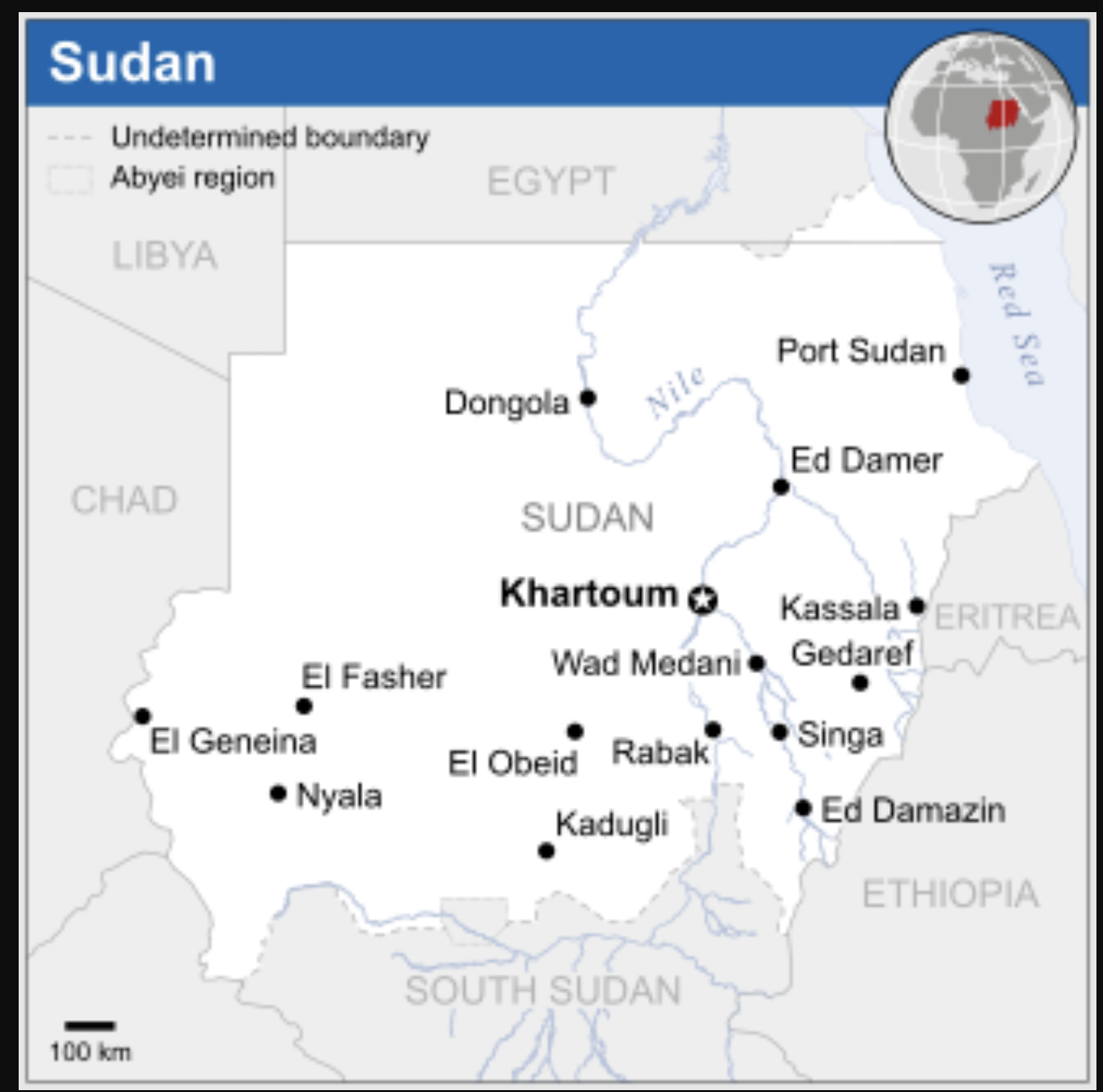
Sudan is the third-largest country in Africa, positioned in Northeast Africa where the Arab world, sub-Saharan Africa, and the Red Sea trade routes intersect. That geography has always mattered. For centuries, empires moved through this land. Trade routes carried gold, livestock, gum arabic, and beyond
Today, that same location keeps Sudan geopolitically central. Its proximity to the Red Sea makes it important and attracts the attention of imperialist nations and powers.
Anglo-Egyptian Rule Shaped Borders and Power (1899–1956)
After the British defeated the Mahdist state in 1898 at Omdurman, Sudan became what was called the “Anglo-Egyptian Condominium.” In theory, Britain and Egypt ruled jointly. In reality, Britain controlled it.
From 1899 to 1956, Sudan wasn’t governed as a unified political community. It was administered as territory — strategic land between Egypt and the rest of East Africa. Borders weren’t drawn around cultural coherence. They were drawn around imperial interests.
The British centralized power in Khartoum and the Nile valley. They built railways to move troops and goods, not to connect communities. They invested in irrigation schemes like the Gezira cotton project because British textile mills needed raw material. The state apparatus — civil service, army command, tax system — was concentrated in a narrow river corridor.
Peripheral regions were governed differently. The South, for example, was administered under a “Closed Districts” policy that restricted movement and education, intentionally isolating it from the North. Western regions like Darfur were incorporated later and governed with minimal investment.
So from the beginning, Sudan was administratively fractured. Power was centralized. Margins were peripheral by design.
That structure survived independence.
what’s happpening in sudan?
Create something you're proud of.
Whether you're just starting out or taking things to the next level, we have everything you need to connect, engage, and make something truly yours.
Women organization in sudan
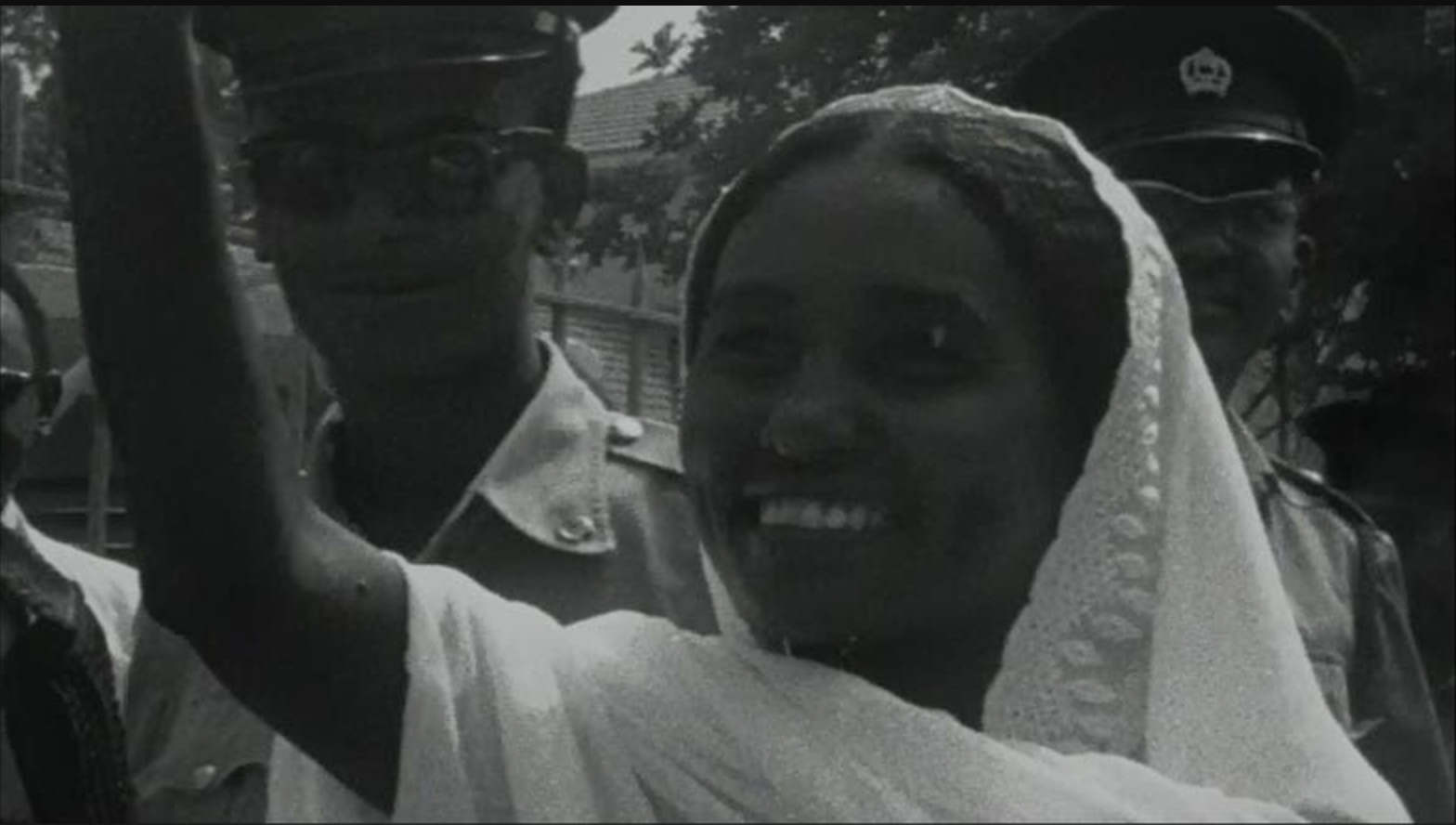
Women’s Cultural Association (Founded 1946)
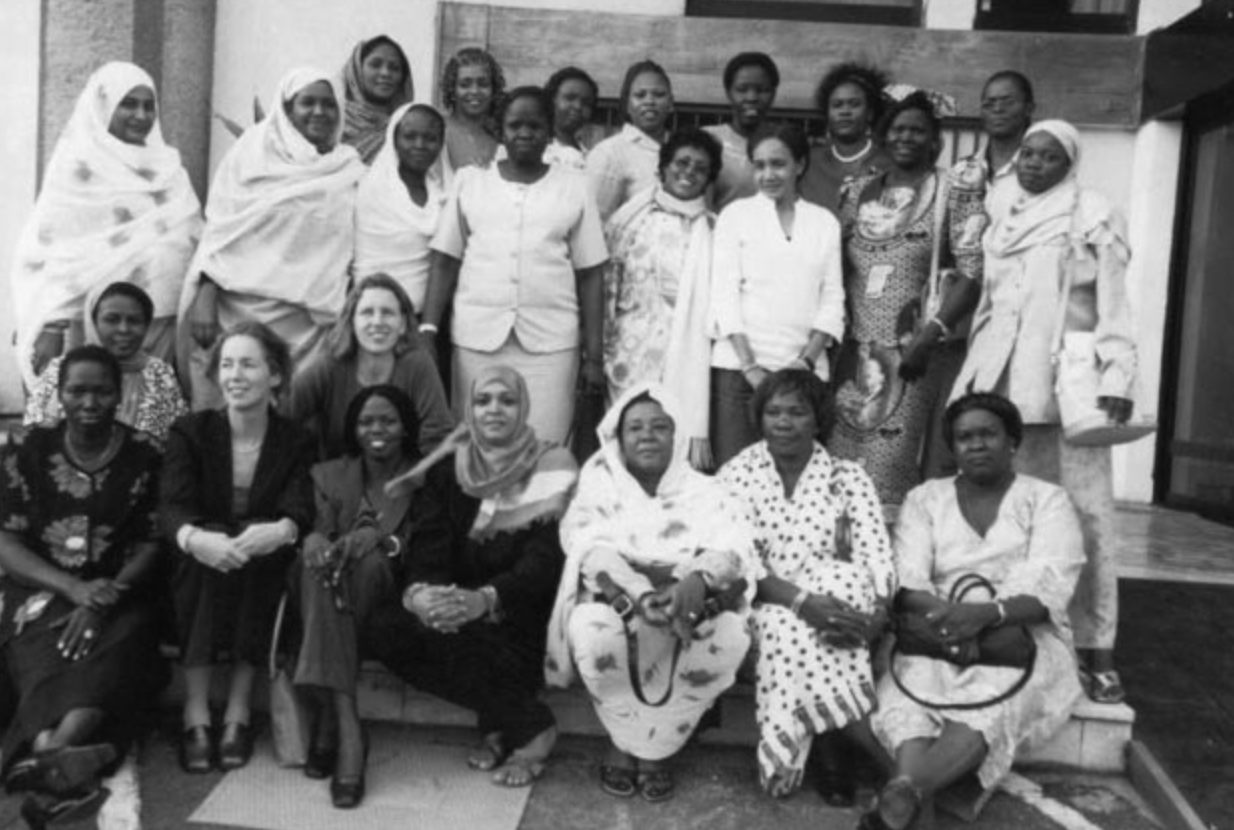
In 1946, under Anglo-Egyptian colonial rule, Sudanese women formed the Women’s Cultural Association. This was before independence. Before formal political rights. Before suffrage.
The organization focused on literacy, education, and political awareness at a time when women’s access to schooling was deeply restricted. It created space for women to discuss nationalism, colonial rule, and social reform.
This wasn’t charity work. It was political groundwork.
By the late 1940s, Sudan was experiencing growing anti-colonial agitation. Workers were striking. Students were organizing. Women were building intellectual infrastructure — reading circles, lectures, and community networks that connected gender liberation to national liberation.
They were preparing to intervene in public life.
Sudanese Women’s Union (Founded 1952)
In 1952, just four years before Sudan’s independence (January 1, 1956), activists founded the Sudanese Women’s Union (SWU). This became one of the most influential feminist organizations in Africa and the Arab world.
Key figures included Fatima Ahmed Ibrahim, Khalda Zahir, and Nafisa al-Amin. Many of them were teachers, professionals, and politically active in broader nationalist movements.
The SWU did several radical things for its time:
Linked women’s rights directly to anti-colonial struggle.
Rejected the argument that gender equality should “wait” until after independence.
Built mass membership across urban and working-class women.
Published Sawt al-Mara (“Voice of Women”), a newspaper focused on political education.
Independence and the 1964 Breakthrough
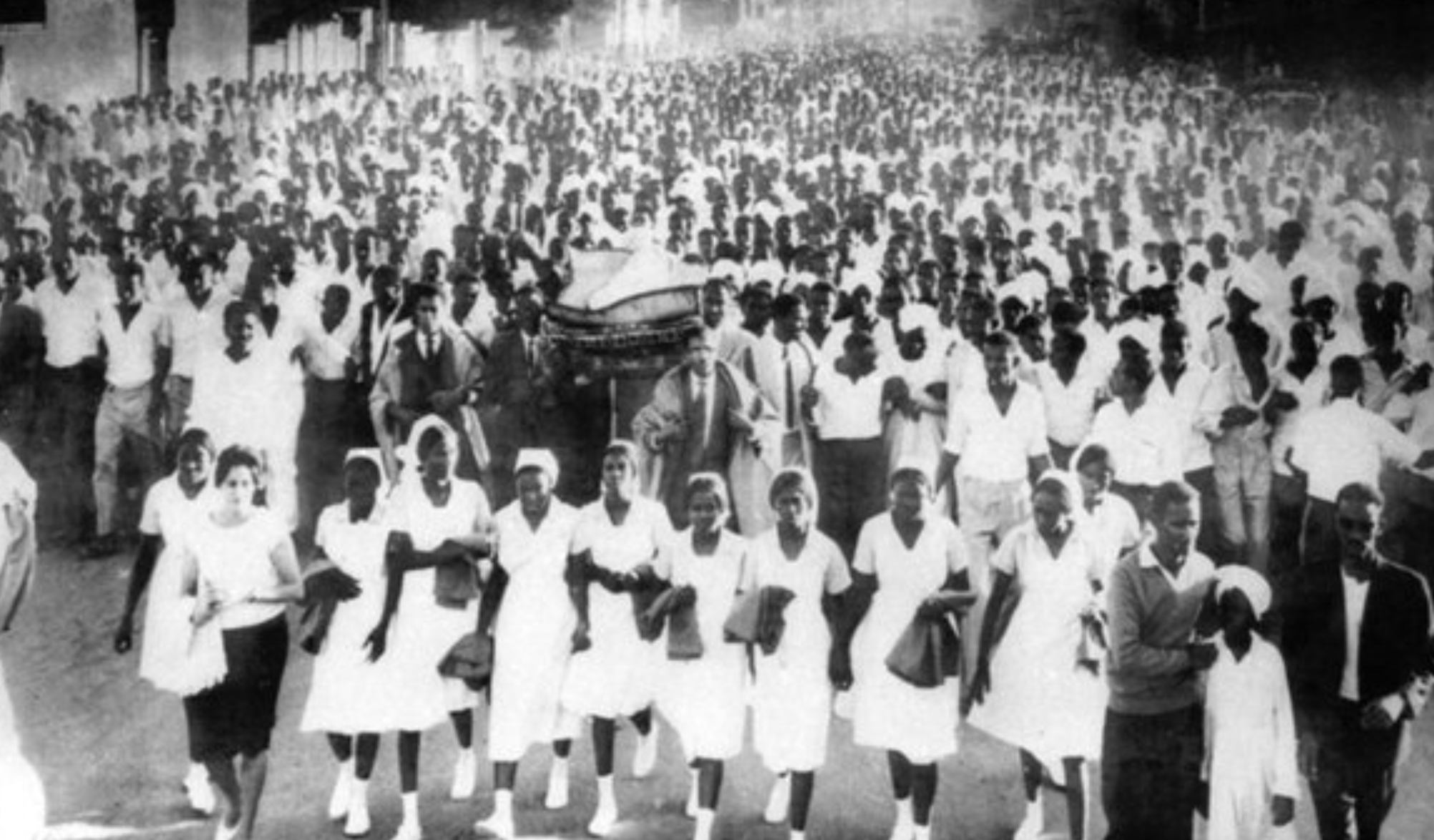
In October 1964, a popular uprising — driven by students, workers, and unions — overthrew a military regime. In the aftermath of that revolution, Sudanese women won the right to vote and run for office.In 1965, Fatima Ahmed Ibrahim became one of the first women elected to parliament in the Middle East and Africa. She used that position to push for equal pay, expanded education, and legal reforms for women.
1965: Fatima Ahmed Ibrahim Enters Parliament
In 1965, Fatima Ahmed Ibrahim was elected to the Sudanese parliament, representing a graduate constituency tied to trade unions and professional networks. She is widely recognized as one of the first women elected to a national parliament in Africa and the Middle East. As a leading member of the Sudanese Women’s Union and editor of Sawt al-Mara (“Voice of Women”), she had already built a mass political base. In parliament, she pushed for:
Expanded access to girls’ education
Legal reforms in marriage and family law
Maternity leave protections for working women
Equal pay for equal work
TEACH-IN TRANSCRIPT
Why Sudan Matters NowWhy Sudan Matters Now
Speaker: This teach-in talks about the historical and geographic foundations of Sudan. It also delves into the different revolutions and popular movements that have happened, whether it be workers strikes and movements, or especially the role of Sudanese women throughout different political formations, whether it be the Sudanese Women's Union and beyond.
Which was really special to dig into really understanding how. [00:01:00] Women really push so many of the revolutionary struggles that we see all around the world. And it also delves into counter-revolution, war, state violence the colonial underpinnings of the region, as well as the grassroots organizing that many folks are doing today, especially the anarchist group in Sudan, which we have had the pleasure of really connecting with doing some of the work to raise funds for.
Solidarity and FundraisingSolidarity and Fundraising
Speaker: And we notably interviewed VOAs last year on the podcast. So if you're gonna listen to this, I would highly recommend you check out our interviews with VOAs and also share the open collective fundraising link with as many folks as consider doing a fundraising effort in your local community because.
The more and more I've done this podcast, and I've especially learned from Jordan's kind of ethics around internationalism, solidarity, and internationalism is an action. So the action can be taking the time to learn here, it can be spreading this information, maybe [00:02:00] hosting a similar teachin in your own community.
We're simply just doing the work to stay up to date and intervene in whatever ways possible in your life, individually or collectively. But yeah, this is a great teach-in, we note a lot of the martyrs near the end of it, which is really important to really remember and honor so many of the revolutionaries that have been martyred.
And just as a note for listening, in the last half an hour or so, it's a q and a section, but because of the way we recorded this, you can't really hear the questions that are being asked. You more hear the answers. So just giving you that for context. Enjoy. Check out the show notes to learn more, of course.
And yeah, support our comrades in Sudan. Talk to you next time.
Workshop Goals and FOA ConnectionWorkshop Goals and FOA Connection
JORDAN: This is Sudan from Below. A little bit of a workshop about. The anarchist group in [00:03:00] Sudan. A little history and context of what's going on, their vibes and gonna talk about the revolution a little bit. Anarchism and the struggle in Sudan. I think it was in July, I'll get to it later more, but that we got connected with fois which I think actually I can tell from the back of his head.
That is Fois on the left. But FOAs of the anarchist group in Sudan they were doing some fundraising through the C-N-T-A-I-T, like an anarchist union in France that was helping fundraise exile transportation for some of the comrades. And through that they were also doing some publishing.
And I got onto that and was like, we gotta have 'em out the dugout. So we did, became close friends and then now we are doing this 'cause through that friendship and other political engagement media we're doing. We know a lot about the group we wanna share with folks and make sure that folks are able to support because we're also doing a fundraiser for [00:04:00] our comrades in Sudan.
It's up there on the Open Collective support Sudanese comrades. You can sign up as a monthly or one time donator as big or as small as your heart desires or can do that month. You can also throw events if you want, and send all that cash through to the open collective that way. So it's a good way to, if you have other ways to support and you want to, and hold an event kinda like we're doing here and other people have done across the states.
I think today there's one happening in Madison, Wisconsin over the weekend. There's one happening in Berlin somewhere on the west coast. There was one a couple months ago. And then in North Carolina, can we get a round of applause for Durham, North Carolina? 'cause for fucking some reason the anarchists down there goes so hard.
They've raised. We've raised a total of 30 K, but half of that is all Durham. From fight club parties to dance parties, to, doing what needs to be done and getting the money to the open elective. This is me, I'm from Columbus, Ohio, [00:05:00] born and raised. I am a media maker, organizer, co of the dugout, decolonial activists.
Very interested in internationalism and the different ways that sort of framework can broaden and ground at the same time. Our perspective about who we are, the struggle we have, and how we can go about engaging things. No. So today we're gonna go over some historical and geographic foundations of Sudan, the revolution, the resistance and popular movements, the Counter-revolution, war and state violence, grassroots organizing, and the Sudanese anarchists.
The Sudanese anarchist group and the global solidarity that has been popping off Sudan.
Sudan Geography and Power CentersSudan Geography and Power Centers
JORDAN: It's a big ass country. I I meant to put in a map over here, but it would be like if you went from Minneapolis to Maine all the way [00:06:00] down to wrap the half shape of the us. Like from the Midwest Appalachia, just that whole, and then the deep south, the eastern coast of the deep south from the right of Texas all the way to the end, or panhandle, whatever the fuck it's called.
I don't think it's called Panhandle, but yeah, it's huge. It's the third largest country in Africa. It sits at the crossroad of a lot of Arab, African and Red Sea trade routes 'cause it's right on the Nile River. Any of y'all ever heard of that thing? I think they definitely taught us that one. And it's definitely shaped around it.
And a lot of the population, agriculture and all the cities are right in those corners with different routes. With kind of, I should have put a picture of the railway. Oh, that's different. But yeah, Nile all the way right there, all the big cities. Proto is right here where the Blue Nile and the white Nile meets is where the capital city is.
Borders seven different countries and it [00:07:00] is a wide diverse terrain of like biomes that are in there. And by what I mean three to four, because I think there's only seven or five. But anyway, I don't know. Desert Nile Valley, lots of fertile regions. Also, I will never pretend like I'm the only person with information in the room.
If anyone ever hears me say something or something, they're like, that's. That's a little incorrect. Feel free to spout out knowledge or if you feel like you have something to add, if you knew anything about the topography of Sudan, I'd love to hear about it because I spent more time putting pictures of my comrades on this than I did Sudan, because the river goes like this.
Colonial Rule and MarginalizationColonial Rule and Marginalization
JORDAN: This place never got a lot of attention. These places closer to the river, they right there always where the state powers were. And it was a Anglo, it was a British and Egyptian colonial rule that kind of had the center [00:08:00] of its power here and then projected itself out outward as empires do. Ur, which I'm sure hopefully folks have been hearing a lot more about recently has a lot.
History with the genocide over the past. Honestly, I would say like a good hundred, 200 years. Especially because of all the, yeah, 'cause it was warped into Sudan during the colonial period and about the 20th century. And it's about the size of France with a history that just like predates modern Sudan as like the colonial entity that it was where these borders got mainly drawn.
But yeah, it's just one part of the history of, there's a lot of peripheral activity within Sudan, even to this day. And it's something that's really important to understand that this is typically where state power. Is trying to legitimize itself first. There's been a [00:09:00] plethora that I will go over of coups and revolutions and revolts and uprisings and there's a sword history of just people taking cartoon and thinking they can rule English and the Egyptians ruled and shaped all those borders right there.
This is a newer map with South Sudan. There's a split there, but we're not gonna talk about that today. That happened in 2011, but it was a very big divide in rural ethnic governance. The political and economic power, like I said, was in cartoon and the peripheral regions, especially Blue Nile and South Han, have historically been like underdeveloped, not given any support from patrons marginalized.
It was called the Anglo Egyptian condominium. It's that old from like 1899 to 1956. The British controlled it mainly just to secure the Nile, so that's what they were more interested in. And the cotton production was essential for Egypt at the time, [00:10:00] and it became a part of the imperial economic system.
The land, the labor, and the agriculture were all reorganized to serve colonial export markets. And the British imposed racial and rele racial and regional hierarchies that governed through select elites and certain tribal leaders in religious authorities and intentionally divided North and South Sudan restricting movement and developing the south from having a unified resistance for all of Sudan.
The next section anyone have any questions so far though? Beautiful.
Rail Workers and Labor StrugglesRail Workers and Labor Struggles
JORDAN: And if you ever do let me know Revolutions in the resistance and the popular movements. So the rail workers in the 1940s, I'm jumping over a lot of history here to get to the modern day. I will say this is not an authoritative or comprehensive history of Sudan.
But there's a lot of cool shit we should talk about that also directly influenced the anarchist group in Sudan. [00:11:00] Everything you're hearing about today, you could say, and literally are the parents and grandparents of the people in the Archus group in Sudan. Like in the workers movements that really rose up and boosted the independence movement it was one of the most important forces in Sudan.
The railroads were central to control and colonial control. Again, I wish I put a map on here, but railroad workers were really strategically positioned to have some fighting power and in the forties. They formed really strong unions and became known as the working class resistance. And that was mainly in at, which is in I think the southeast, but don't quote me on that.
There are other things in here you can quote me on everything I don't say, don't quote me on, please don't quote me on. So they organized, strikes, protest, political demands, and it wasn't really like how we think [00:12:00] of unions where everything was more about like wages. Some of the central demands were like having autonomy ending colonial domination and having dignity because there was like this whole regional and racial caste system that was still going on that was going on very heavily.
And it became one of the strongest labor movements in Africa and the Arab world in the 50 or 40 nines to fifties. The railroad workers were a part of something and helped start the Workers Congress, which in 1950 became the, and I only have the acronym written down. Isn't that beautiful? But it made this big trade Workers Union Federation and the Federation was really closely associated with the Sudanese Communist Party at the time.
And its actions were extremely political and it failed to receive government recognition over and over again. Like they definitely tried, but it was not, it was had too radical in character. They weren't only talking about work site issues, [00:13:00] they were talking about whole societal things and trying to unite folks.
After national independence, the Federation had frequent confrontations with the new government, including a successful general strike in October, 1958. And it's one of the factors that contributed to one of the cos and military takeovers of the government. The following month, it controlled the whole trade Union Federation.
Control about 70% of labor union membership by the 1958 coup and the new military government repealed a bunch of ordinances, dissolved all the unions, and detained many of the federation's leaders. And by the time in 64, and we'll go over this again, when there was more civilian leadership, the IT got it reemerged and the union membership increased and it remained in mainly communist hands.
And then 1971 communists tried to do a coup, [00:14:00] didn't go so well. A lot of people got hung, the union got banned, a lot of people were executed. And then in 1970s it was reinstated. But a lot of what they're organizing in the like post 89 coup, or after the post 89 coup. This new government, the, it was the government that came to power that is no longer in power, but some of the regime is.
But the Revolutionary Command Council for National Salvation Revolution had really cool names back then, but that's that's what they suspended the right again, there was no collective bargaining. There was the death penalty back for labor organizers. A lot of leaders were arrested and then they had a labor in exile called the Legitimate Sudan Workers Trade Union Federation, Sudan, workers Trade Union Federation, that's the name of the whole [00:15:00] federation.
And in 1998, they were provided the right again to organize for trade union purposes. But as of 2011, restricted this, right? And now there's a government owned trade federation that is leading mainly blue collar labor organizations and has got about, like less than a million people in it when we're organizing and go in hard as hell.
And were central to Sudan's independent struggle. Even though if you try to read some, through some of the histories and all that, they are definitely erased from the central histories and traditional histories.
Sudanese Women OrganizingSudanese Women Organizing
JORDAN: In the forties and fifties, women were organizing politically in amid, which is more northern of cartoon and cartoon.
And one of the most important organizations from that moment is the Sudanese Women's Union, which was founded in 1952. They fought on multiple fronts at the same time, [00:16:00] they fought against British colonial rule. They fought against patriarchy and of like body mutilation and property ship. They fought for women's education, political participation, and labor rights.
They founded so many schools and so many girl only schools at the time. And they were also organizing the protests, writing political publications, mobilizing communities. If there was an organizing scene that happened, it was probably dominated by Sudanese women. There were other ones like the Women's Cultural Association, which came before in 1946.
They were not as radical, so it definitely, there was still a huge need for the Sudanese Women's Union. But yeah, the. Not there was anything wrong with the cultural association. It was just like a lot of, educated urban middle class and upper class women. They focused on literacy, social welfare, and cultural activities and were like less openly [00:17:00] political, but they were definitely inspirational in a part of the lineage that the people in the Sudanese Women's Union were coming a part of.
It's not like there was, there was some bad blood, but it's not like they were like at each other's throats. Especially because being an open organization and especially a women's organization was and is, or was something that was less prominent at the time and more likely to be repressed by familial communities, neighbors, things like that.
And the Women's Awakening Association also promoted girls' education, including and encouraging women. To participate in public life in raising political awareness. And they eventually, a lot of the leaders in that eventually, or not even leaders, a lot of the people in that just joined the Sudanese Women's Union after it started.
And then the Sudanese Women Teachers Association was extremely important. 'cause the teachers and the schools are very inc. Ary, let's say they're a hot spot for revolution [00:18:00] thought, dissemination of information, a lot of activity that can go through that people aren't looking at because it's seen as something that why look at it twice unless there's a problem.
And if people didn't know there was a problem yet, there wasn't. But they organized politically, they spread nag, nationalist ideas through the education and helped to mobilize students and communities and yeah, one of the many founders of the Sudanese Women's Union. And Fatima, ah, I and Sahi, and there's also that I don't have written up there, but re Bibi and Haja Kashif and Fatima Talib.
And those were like all kind of the central founding party members, or not even party members, they were the executive coordinating committee that was getting the organization off the ground, gathering resources and then making reaching out and doing the outreach [00:19:00] for the rest of the group so that there could be a group to have a union with.
And but more on the Sudanese Women's Union. They did mass political mobilizations, political education and consciousness. They were bringing women into public political life on a scale that just had not existed before in Sudan. They had a magazine called Swat Amara, which means the voice of women that I was not able to find any pictures of, no matter which language I was searching in.
So I'm really wanna ask the comrades to see if they have any of those left. Because I know like half the group's grandma, half of these are, the lineage. And they helped develop generations of politically conscious women who saw themselves as part of the national struggle. They were arguing that independence would be completely null and void, incomplete without women's emancipation.
So they pushed hard for education, equal pay, [00:20:00] labor rights, and voting rights, and they were very Pan-Africanist in their early years as well. They were organizing solidarity actions for women. Against Apartheid and Zambia, South Africa and Namibia, and protests in against the 1961 execution in assassination of Patrice Lamumba in the Congo, and protested against the arrest of Dalma Baha, who was in Algerian.
Yeah. And Algerian anti-colonial activists who participated in the 2019 street protests as well. So like they're still existing, but in a newer formation. But just to meet the needs of what it looks like in the 21st century and not the mid half of the 20th. They were campaigning for education building schools and cartoon and uman and organizing international conferences for women's literacy that was attended.
Many of the other women organizations around Africa and saw evening classes for adult women, encouraging [00:21:00] women in women's health education, opposing, underage and forced marriages. They had also campaigned against or campaigned for polygamy to be regulated and for the rights of consent to marriage, allowing laws that required requiring abused women to return to their husband, like abolishing those, fighting for the like women's employment rights.
And eventually, after 1964, they did get electoral rights, and that's soon after in 65 when their name Fatima Iham, became the first woman elected to the Sudanese Parliament. At the time it was called the Constitutional Assembly. She was also one of the first like central leading figures in like the Communist Party central committee at the time.
Her and half of the Sudanese Sudanese Women Union were all Sudanese Communist Party members, and a lot of them were in leadership positions.
Independence and Coup CycleIndependence and Coup Cycle
JORDAN: And then they got independent, 1956, all [00:22:00] that organizing railroad strikes, everyone in the streets there was kinda went down like a, the military was like, all right, this dude can't politically do anything, so they cooed him.
And there was, and also like it was colonial rules. So it was just like becoming too much to maintain for foreign powers. Students were organizers, workers were striking. Britain was also pretty weak after World War ii, facing anti-colonial struggles all across where they were dipping their fucking fingers in Africa and Asia.
And Sud Sudan became increasingly ungovernable without massive repression, and they just couldn't put up the check for it. So independence was declared in 1956, but it's pretty incomplete. As we were saying earlier, there are some things that still needed to be done other than just getting rid of the oppressors.
The centralized power still remained in effect in cartoon. It was transferred to the Sudanese [00:23:00] Elite. No workers, no worker organizations, no public life or neighborhood or social organizations. No autonomous organizations, no women organizations. So there have been repeated revolutions after that.
And that lived on for a long time till now. In 64 and 65, pretty soon after there were mass revolutions, mass strikes, uprising. The regional marginalization was continuing to intensify as the more local government and elite was unable to hold on. There was cues and revolutions from 1958 or nine from nine, so from 1956 into 19 58, 64, 69, 85, 71.
I almost missed that one. Attempted ones in 2021. They have a strong revolutionary tradition within them. The 1964, the mass protests and strikes overthrew military [00:24:00] dictatorship. Again, the thing is also in Sudan, is that there is a large history of mass public buy-in, and then the armed element of it is like usually the military.
Then coming in and being like, all right, we deposed this leader. They do military rule, civilian government, military coup popular uprising, temporary democracy coup again, civilian government. It like it goes between different forms. In 85, they also had another uprising. That one was also against military rule.
They were also like heavily relied on worker strikes. The neighborhood organizations that were popping up in 1985, they used one of my favorite tactics, which is they called it a dead day. Which is like one of those strikes sit in things where okay, instead of everyone go out to the street, we all just stay in our house and just chill.
Like they can't take us all out of our house At the same time, I can't remember where else I've seen this at or heard about [00:25:00] this, but things I have, I was always like, that would be sick. Yeah. They demonstrated their ability to shut down the city. The revolutions establ a bit of a pattern mass uprising over throwing dictators or people accumulating too much power, not following through on their transitionary promises.
Like every time the military takes over, they're gonna be like, we're only doing it for three years, I swear. And then it's like year four, and they're like, okay. Or it's year two and they're like. You're literally acquiring more weapons to kill us. So how about we just do something about this now?
Yeah. The Sydney Women's Union was extremely active still after the independence. One of their biggest achievements or like one of their big achievements is the, they participated and mobilized and were completely instrumental to the 64 October re revolutions that over through the military regime and through that at that point to people, they were unignorable, they got more rights to vote and run for office.
And then [00:26:00] there, when, that's when Fatima Ibrahim, which I have a short video I'm gonna play for y'all about Fatima when she got into the assembly, which there was some tension in the SW about political participation, especially with it at its current state. But it was still extremely connected to other leftists and communist currents, especially the student Communist Party.
And it was repeatedly banned under military dictatorships under ed in the seventies and 89 under Bashir.
Fatima Ahmed Ibrahim SpotlightFatima Ahmed Ibrahim Spotlight
Speaker 3: In a world where women's voices were often silenced, one woman dared to speak up and change history. This is the story of Fatima Ahmed Ibrahim, the first female parliamentarian in Sudan and the Arab world, a fearless activist, educator and feminist icon who dedicated her life to justice and equality.
Stay with us as we journey through the life of one of Africa's greatest women leaders. [00:27:00] Fatima Ahmed Ibrahim was born in 1932 in Khar Sudan during the British colonial period, raised in a family that deeply valued education and social awareness. Her father was a school inspector and a great influence on her early intellectual development.
She attended Derman Girls Secondary School where she founded a school magazine that boldly addressed women's issues, a sign of things to come even as a teenager. Fatima was already showing signs of the activist she would become after completing her secondary education. She went on to study at the University of Khartoum where her involvement in student activism deepened.
It was during this time that she joined the Sudanese Communist Party. Which was committed to progressive causes, including women's rights, labor laws, and anti-colonial resistance. In 1952, Fatima co-founded the Sudanese Women's Union, SWU. [00:28:00] An organization that would become one of the most powerful women's movements in Africa and the Arab world.
Under her leadership, the SAWU fought for equal pay maternity Leave education for girls and legal protection against gender-based violence. It also established clinics, literacy programs, and support services for working class women across Sudan. Fatima also served as editor of the SEO's Magazine, salt Al Mara voice of the Woman, where she published Bold Revolutionary Ideas about gender equality and political freedom.
In 1965, Fatima Ahmed Ibrahim made history when she became the first woman elected to Sudan's National Assembly and indeed the first woman to enter parliament in any Arab or African country. This was a monumental achievement, not only because of her gender, but also because of her party affiliation and advocacy for the working class.
In Parliament, she championed [00:29:00] legislation focused on improving education for girls, securing women's rights in marriage and family law, promoting healthcare access for mothers, protecting the rights of laborers and civil servants. Despite facing fierce opposition from conservatives, Fatima remained committed to creating a more just and inclusive Sudan.
Fatima's political rise, however, came at a heavy cost. After the 1969 military coup led by Jafar Niari, the political climate in Sudan shifted dramatically. Initially, the Communist party supported Neer's regime, but tensions quickly escalated after a failed coup attempt In 1971, allegedly backed by communists, many of the party's leaders were arrested and executed tragically.
Among them was Fatima's husband, a Al Shafi Ahmed El, a well-known trade unionist. Fatima was placed under house arrest for several years and was [00:30:00] later forced into exile. She spent years abroad, particularly in the United Kingdom, continuing her advocacy from afar and working with international women's organizations.
Her resilience in the face of personal loss and political repression became a symbol of hope for many Sudanese and African women. Fatima returned to Sudan in the 1990s despite the repressive rule of Omar al-Bashir unafraid of government threats. She resumed her activism and remained a vocal critic of political Islamism militarism and the erosion of women's rights.
Even in her later years, she continued to write, speak at international forums, and advise younger generations of women activists. She became an icon, not just in Sudan, but across the globe as a feminist who never gave up, no matter the odds. In 1993, Fatima received the prestigious United Nations Prize in the field of [00:31:00] human rights.
Recognizing her lifelong dedication to justice and gender equality. Fatima Ahmed Ibrahim passed away on August 12th, 2017 in London. Her death marked the end of an era, but her legacy lives on her funeral in cartoon was attended by thousands of mourners men and women from all walks of life, honoring a woman who had stood with the people through decades of struggle.
Fatima's life continues to inspire women's rights activists in Sudan, across Africa, and around the world. She's remembered as a visionary leader, a fearless voice for the voiceless, a pioneer of Arab and African feminism, a fighter for justice, education, and human dignity. Fatima Ahmed Ibrahim once said, I believe in justice and I will continue to fight for it no matter what.
And fight she did for Women, for Workers, for Freedom, and for [00:32:00] Sudan. Let us remember her not only as a historical figure, but as a beacon of what is possible when courage, intellect, and compassion meet. If you found this video informative, please subscribe and hit the,
JORDAN: yeah, I just love her story, what she's done, who, what she's been a part of, and think that people should always be honored.
Now, this doesn't look like skipping a lot in a lot of years.
2018 December Revolution2018 December Revolution
JORDAN: In 2018, there is what we call now the December revolution that happened in Sudan at December 19th, 2018 happened in Asda for it was one of some of the first protests. Quickly spread Asda, if you remember where some of the ho home of the railroad union workers were and where they were at their strongest, the bread prices.
From the 18th to 19, literally tripled. People were already pissed of 30 years of military of military dictatorship. [00:33:00] The, his regime was really reliant on military repression, military rule of civilian operations surveillance and control. There was like lots of if you think about back to the Assad regime, like lots of you're scared your neighbors gonna snitch on you type shit.
The public services were collapsing. There was, it started, like a lot of things over an immediate reaction to something and people got together and were like, oh fuck, we're mad about a whole lot else. And then they did shit about it. We burnt down the NCP headquarters in Aspada and in Alala over two days.
And that's part of what got through to the made an emergency. The president do it, president's through, they do an emergency condition. They're like, now I'm gonna go really hard. So the demands, the main slogan was freedom. Main slogans were freedom, peace, and Justice. And they got together and made a lot of demands.
They wanted to end of the military rules. Civilian democracy. [00:34:00] There had been massacres in the peripheries and inside of the region for a really long time. 'cause also around the Nile is where they can trade all the stuff they want and that's where cartoon is. But out in the peripheries is where they mine the gold.
It's where they get the resources. It's on the east. There is a history of some of the slave trade of the east of the Arab slave trade coming through Sudan, but mainly in some of the Somalia area, but that's also a part of their history here. Fair wages, jobs, they wanted the whole shebang.
They had mass mobilizations. The neighborhood sit-ins, their sit-in occupations created liberated zones. A lot of mutual aid and nonviolent disobedience because again, like they had seen over and over again, at least some shit shakes. If we can get everyone out in the street and be mad about it and of really long history of civic participation and organizing, not only through the state and in these neighborhood associations and working groups and just different projects that they had in their community, they did [00:35:00] that and that's where some of the resistance committee comes through, but I will talk about them a bit more later on.
They had a sit-in and talk about like how they, in this book, Sudan's unfinished revolution, how they talk about their sit-ins. It was an example of what Victor Turner, they said called communes and like a spontaneous creation of community without hierarchy or structure or united in a spirit of solidarity and harmony.
Anti structured and shared liminality and instances of communitas can be created as well as crafted ritual or by ideological culture reasons. In the cartoon case, a collective mobilization against oppression, they were talked about how it felt like they created the bare life and bear necessities in the reduction of the human community to its basically elements of sustaining itself, transforming it into a force of political affirmation.
It was a protest camp. It was a big liberated zone where everyone slept together, cleaned their, each other's shit, cooked for each other, got the food, [00:36:00] and it was beautiful and lives vividly in the memories of those who are lucky enough to have the inspiring experience.
Resistance Committees TacticsResistance Committees Tactics
JORDAN: And a lot of that work was done through these neighborhood associations and resistance committees that have been around formally in this formation since 2010, as like neighborhood grassroots groups.
They would organize the barricades, the mutual aid, the protest coordination and were a big part of being like an autonomous communication network. At least I know where to go here to get this information to this person. And was very instrumental when there were eventual internet blackouts. Having this predetermined communication network that was a little more word of mouth practiced a pretty horizontal structure, but not always from 2010, some of them were based around like student living or students or elites and they kept it a little [00:37:00] more closed.
And a part of what the, like anarchist group in Sudans thing was trying to make sure that everyone from inside the neighborhood was able to join. Not if they were already aligned politically with something or having those kind of issues. But that also varies city to city, neighborhood by neighborhood of what the resistance committees were actually getting done.
That's the resistance committees. This little logo thing of theirs just comes from a charter of theirs that they had put out to help folks understand how to organize and what to organize and have a bit of a press kit for what's happening and how they plan on establishing people power.
They have a couple documents online that are really interesting reads, especially if you're like a little bit of an infrastructure nerd like me. They're dope. And also I think they have a lot of really good information. This comes from a survey or a thing written by them, but they had, or not by them, but about them.
They had, through their neighborhood coordination, they would coordinate protests with each other and make it more difficult for [00:38:00] security forces. To identify the protestors and they would frequently agree to protest in each other's neighborhoods and swap around where they were doing things. And that sort of strategy contributed to exhausting security forces.
And another example is they would do a lot of door-to-door callouts, a lot of door knocking, really getting in your community and involved a lot of coordinating and just spreading the news, what was happening. And that is like a part of organizing that has just always been around in Sudan as well, that they've also kept alive through that.
And like I was saying earlier, this was extremely helpful when there was internet blackouts, people knew who to go to. There was already a culture of spreading that information on the need to know basis. And a lot of it, a lot of people needed to know at the time. So it was very useful for that. And then this protest, like all the others, was extremely women led.
I think mostly estimates say it was like 60 to 70% in the streets. And that's not even talking about. All the labor and the resistance [00:39:00] committees, which were also, I would say probably more than 60%. Women, even though when that happened and negotiations started, there was only two to three out of, I'd say maybe 11 to 20 negotiators with the state that were women or from any autonomous women's organizations.
They were mainly through the student professional association. But like I was saying earlier, there's not a single scene. There's not a single scene in Sudan that's not touched by women organizing. And their protesting resistance scenes in lineage.
WHAT IS HAPPENING IN SUDAN - VIDEO
Speaker 4: I want to tell you what's happening in Sudan, but before I do that, we need to go back to a time before the war the month of Ramadan had Don.
On June 3rd, 2019, about two months earlier, the military has taken charge. After former president Amal Bashir was overthrown from power, the place in front of the headquarters of the general command of the Sudanese army. Asman was a young man in his thirties present at a peaceful civilian sitin in the center of the capital ung, [00:40:00] demanding the transfer of power to a civilian government.
A military convoy reached the edge of the Sitin area, and when the police and rapid support forces surrounded that area, protesters chanted, civilian rule, a reference to the civilian government that they wanted instead of the military rule. But armed forces opened live fire on the protesters right after dawn Prayer during Ramadan, while people were fasting, at least 120 people were killed and hundreds of others went missing.
Asman says we tried to push back the rapid support forces, but they surrounded the area and fired at us. Three of my relatives were killed in front of my eyes, two men and a woman. When we tried to transport the body, I felt an injury in my head. I lost consciousness and did not wake up until three days later in the hospital.
The bloody events of Ausman experienced that day, which claimed the lives of dozens were documented in a 60 page report by the Human Rights Watch. They referred to the massacre by the name the General Command Massacre, but did those who wrote this report, imagine that [00:41:00] four years later that 60 pages would not be enough to document the atrocities of war Committed by the same people who committed the crime against Asman, his family and his friends, and that because those perpetrators got away with their crime the first time without being held accountable, it opened the door for them to ignite the flames of war in the country.
A war proceeded by a final Iftar session. Sudan has had repeated experiences with prolonged conflicts and civil wars, and so we would like to think that its leaders have learned from these experiences to avoid dragging the country back into these dark days. But in April, 2023, a new war broke up. And this time it's not just in one area, but in the entire country.
So how did we reach this stage of war in April, 2023 between the Armed Forces led by Abdul Fatah Han, and the rapid support forces led by Heti? We'll discontinue for years, like other war in Sudan, and what were the events that happened that led to that last of thought, which caused the war to break out after I'm Kha Delve, a cartoonist and Sudanese activist, [00:42:00] and I'm here in collaboration with Asia Plus to break down what's happening in Sudan to those who say that the issue in Sudan is simply a problem between two military men.
Then what comes to mind is the solution is. But the story is much bigger than that. So what happened?
Speaker 4: Let's start with General Abha, Bohan and General Mohammad Ham Dagal, who have been waging a war against each other since April 15th, 2023, and the fight for power between them continues till today.
Just days before the war, they were partners in power. Heti and Boan are not two military men who found themselves in Powered by coincidence. This is them in 2019 in the transitional military council, Bohan as president and Heti as his deputy, two military leaders of two armies in one country. The first Army is the Sudanese Armed Forces led by Bohan.
The second is the Rapid support forces previously known as the Jwe, who are described as the militia group led by Dega, a militia leader. But how can a [00:43:00] militia leader become a part of the government and also be so powerful? The wage, a war against the army for centuries. Sudan had a long history with the military, and it was with the start of the British occupation that sparked the modern formation of the Sudanese army in 1925.
In 1955, the British who occupied Sudan left and then independence was declared leading to a civilian government. But since politicians disagreed on the form of this newborn state, this sparked conflicts between the parties, which became the beginning of politicians calling upon the military for help.
In 1958, Ibrahim Abbu led the first coup, followed by another one in 1969, led by JA and Emir. This allowed for war to take over parts of the country paving way for the third coup in 1989, which brought Al Bashir to power. That led to 30 years of dictatorship on Sudan and its people. And this 30 year rule, which caused internal political instability.
Multiple crisis and wars across Sudan ended with a chant from its people just fall[00:44:00]
after widespread popular demonstrations. The army responded by ousting Bahir from power leading to the fall of his regime in April, 2019. After Ousting Bashir, a transition in military council led by Abdal Bohan with Heti as his deputy ruled for several months due to ongoing demonstrations and agreement was reached in August, 2019 with the civilian power to form a Sovereignty Council.
Chaired by Al Bohan. This council included both military and civilian members. This power sharing arrangement lasted until the military 2021 coup attempted against the civilian component of the council. During this time, the two initiated normalization process with Israel Sudan was removed from the list of state sponsors of terrorism, and the Juba peace agreement was signed in 2020 to end the war in the country.
But did the political situation really [00:45:00] change? Civilians returned to a state of push and pull, and this time not with the soldiers. But among themselves now, Sudan, a country already suffering from economic crisis and political division faced yet another coup. It was in October, 2021 that the military takeover took place led by those two men that ran the sovereign cons, Boan and Miti.
They claimed that the coup was to correct the path of their revolution after the coup. Bhan announced that the military would hand over power to an elected government before July, 2023. But that didn't happen. What happened was something else, bloody and frightening. Why was it that the two men in power in agreement, during a critical period of the country's history turned to disagreement at the cost of its people?
This time they couldn't move forward alone. The military was forced to sit down again, to negotiate with the civilians, and at this particular point, the signs of division between the two men began. [00:46:00] In December, 2022, they reached an agreement and it talked about bringing the Democratic transition back on track after the attempted coup forming a civilian government and preparing for elections.
But despite this, differences began to clash to the point where they started competing to arm themselves.
Speaker 4: However, the major point of disagreement was that all military forces in Sudan, including Hetis, rapid support forces were merged into one army and that raised the alarms for Heti. Hanno was adamant about his conditions regarding how and for how long integration processes would take place, insisting that it should happen within a year.
However, HETI had a different vision stating that the process would take a decade. Heti did not want to lose the power. He spent 20 years building. Mohamed Hamdan dga, known as Heti from the Arab Rega tribe in Darfur. While there's a lot unknown about him, people say that he's in his forties and his tribe is known for trading and camel herding.
He founded the local militia to protect the camel caravans. His business expanded and he even owned a furniture store in [00:47:00] Nialla, the capital of South Taur.
Speaker 4: For centuries African Arab tribes coexisted in the region of West Sudan, but the region's conditions myriad that of the entire country, desertification, drought, internal displacement, and agricultural policies that ravaged everything.
Signs of discord between Arabs and non-Arab began to appear since the 1980s, especially after the F that hit the region. It led to the rebellion that erupted in 2003 against the central government. In ung, non-Arab tribes rebelled against the government neglect of the region development and its bias towards Arab tribes.
The government in UNG did not want to intervene directly this time, so it took an easier solution. Proxy war Ammar Bashir regime supported the establishment of the Jwe militia composed of Arab tribes to suppress the rebellion and the name Jwe matches the meaning.
Speaker 4: Gin on horseback Sudan was set for a new chapter of tragedy, killing, displacement, and rape crimes perpetrated by those men, and documented in rights reports.
Hundreds of thousands fell victims to this war, [00:48:00] and around 3 million people were displaced amid all the bloodshed and war. Heti was climbing the ranks and emerges one of the leaders of the jwe in South Dar four, and in other areas, the man became a warlord. So what did that mean for BuHi? Despite all the atrocities committed by the Jwe militia led by Heti in support of Alba regime, and despite the regime support.
For them.
Speaker 4: Heti rebelled against the Bahir in 2007, but later he said he didn't actually intend to rebel. All he wanted was to attract the government's attention to gain higher military rank and political position. Heti was looking beyond being just a warlord, fighting a proxy war for the country's president, and he got what he wanted.
The Bahir regime granted him the rank of Brigadier general, despite the fact that Heti had never set foot in a military school in his life. Heti forces once one of the Jin wheat fractions transformed into something resembling an imperial guard for Hamal Bashir. The rapid support forces were founded from the Jwe.
And ti began appearing everywhere. Military parades, division reports, and it was even said that [00:49:00] Bashir called him Heit, my protector and the cycle of killing began to turn once again. Human rights watch documented in a 2015 report titled Men With No Mercy, how the Rapid Support Forces Committed Crimes in therefore, particularly during two military campaigns called the Decisive Summer Operations entire communities were forcibly displaced wells and food storage facilities destroyed and wealth looted, including crimes of torture, killings, and mass rape.
So how did respond to this through another military promotion?
During his years of Rule, Al Bashir took greater steps to bring Heti closer to him, making rapid support forces and independent force in 2017. And it became directly affiliated to the presidency. By doing this, MITI was able to position himself on the political and military map of Sudan, and he climbed through the various promotions from brigadier to major General to Lieutenant General and the size of his forces doubled.
Speaker 4: With some estimating it at 40,000, the most important aspect of his [00:50:00] rise to power is how he built his financial resources from the early years of forming his forces, HETI imposed control over the most important goldmines in Sudan and relied on them as his primary source of funding even participating in the Yemen war in 2015 to fight the Houthis further strength.
His financial wealth. Additionally, the RSF participated in operations to curb irregular immigrations to which led to them receiving European support. Some say a Bashir's regime reaped what its and wanted the RSF forces to have the final saint that for, but what happened in qto was something far beyond that.
Speaker 4: With the outbreak of the revolution in 2018, it was expected that Heti and his forces would be similar to an Imperial Guard to Al Bashir's regime. And initially it seemed that way, but with the persistence of the protestors, it appeared that Heti chose to jump ship. He abandoned the Bashir and called for his overthrow, but Heti was just one part of the new elite that were taking over Sudan.
Athan, the counterpart to Heti was born in 1960 in River Nile State. He graduated from the military college and worked [00:51:00] as a military attache in China. He rose through the ranks until he became commander of the Land Forces and was promoted to the rank of General by Bahi in 2018, making him Inspector General of the Armed Forces.
His path crossed with Heti before the revolution. Al Bhan played the role in crushing the rebellion in Dar four. He was also supervising the Sudanese forces in Yemen in coordination with Heti in 2015, and they met again. After he took oath at the head of the military council in April, 2019, after the outing of Al Bashir, however, their fates would later collide over the issue of integrating the RSF under the Army's command.
Speaker 4: It all came to the forefront during the last eftar in Ramadan 2023. As the conflict between the two generals escalated, mediators tried to intervene, an agreement was near, and the main point of discussion was the military leadership structure. During the transitional period, the generals had Ramadan Eftar at the home of Lieutenant General, the Deputy Arm commander, but the scene in the street was completely different military vehicles and RSF was spreading across ung.
The first shot was [00:52:00] fired at Don. On April 15th, 2023, and that was the beginning of war in Sudan. Heis says he's fighting this war for democracy and the civil state and that he will not allow Wuhan to have a military state. Meanwhile, Wuhan considers himself defending the country from Heiss Betrayal as Commander and chief of the Armed Forces.
This left Sudan's map fragmented to the extent that some cities were divided between the rapid support forces and the army. Both sides are determined to resolve the battle literally, and they claim that the victory is within easy reach, but neither of them has been able to achieve it. So far, all negotiation tracks have so far failed to reach a solution.
It was as if a bomb has exploded and scattered shrapnel everywhere, costing the Sudanese, their lives, their homes, and their future alive, unlike the one they aspire to live, and a daily reality made up of continuous war crimes.
END OF VIDEO
JORDAN: Yeah, so that's why through some of that, there's the framing of this as a counter-revolutionary war.
[00:53:00] More than it is a civil war, which is not two parts of Sudanese society fighting. It's more a proxy war of people who have their own backers and interests, who are interested in continuing to maintain some of that shit. If you're interested more of this, I recommend reading Sudan's Unfinished Democracy.
Extremely good book. The power sharing agreements were not really that fire. And like I was saying, most actual like autonomous organizations that were made from this federation moved on or didn't invite them to the negotiating tables. But one thing I wanna get into a bit more is the RSF and a bit of what we're talking about.
Genocide and Ethnic Cleansing
JORDAN: When folks say there's a genocide happening in Sudan, there's ethnic cleansing happening in Sudan. I feel like no one's talking about like the ethnicities being ethnically cleansed from the region. Specifically in the Dar first state, which just so happened to be the fir because it's our fir means home of the fir and the ma, [00:54:00] which non-Arab tribe as well, or ethnicity, the Zawa and other, mainly non-Arab.
They are considered Arab supremacists. They RSF and come from that lineage of being, I dunno, just a shit ass, I don't have much to say on that over counter revolution. It destroyed a lot of the revolutionary infrastructure as they were saying. They kept saying, oh, we're negotiating.
Pulling along the civilian and the protestors and the sit-ins were still happening all the while they were. Getting ready and warring up and consolidating their own powers and forces so that they could go to war. And then now we're all here for the Archist Group of Sudan. Yes. But this is, yeah. Why they consider it more of a counter revolution than a civil war and more of a proxy war through the RSF is backed by the UAE and through other places.
That's mainly where, like the RSF since they were always in the DAR four West region, they had a lot of control over the gold [00:55:00] mines, which is how they are funding this. And so they get it out through the UAE and through Libya. And I think that's, let me not say Libya, I think UAE and something else, somewhere else.
Yeah. And the anarchist group in Sudan likes to call it sometimes a quasi civil war 'cause it's like a framing that people can understand. But, and even as it's just like two military men fighting the RSF at this point has tried to make a government and tried to have it be recognized by other people by other states.
Which hasn't gone too well, thankfully. But yeah, 'cause they came up from destroying the revolutionary infrastructure. The RSF was a big part of being like the president's paramilitary force and doing an exerting as the will and the military through another way of just. Trying to find a way to keep power, keep themselves up.
They overthrew Omar Behe. And then that's when there's was a transitionary military council that came [00:56:00] into being that kind of is what negotiations were going on between. And like they were saying, the RSF Eddi wanted to take 10 years for the transition. And the Sudanese armed forces were saying, or Elba was saying like, we should do this in one year.
Both of them didn't really care about getting a civilian government in charge. They wanted to, like one year is just enough so that he could pick who they want to be in the civilian government in 10 years is long enough for them to not be able to it's for them to center their own power and legitimacy in the state and try to come from that because the RSF does come from the peripheral regions is where some of their drive comes from.
But a lot of the RSF military. Is foreign contractors and militaries. I think at this point they have Colombian fighters in the RSF side fighting the Sudanese armed forces. And a lot of the framing now, especially from the comrades in the anarchist group in Sudan, is like seeing the RSF as the invader.
We need to deal with this right now. [00:57:00] And then when we have, when we're done dealing with that, they are still critiquing the Sudanese armed forces, which is what's getting them in a lot of trouble as well and facing repression. But the priority needs to be getting the RSF off our backs so that we can get out of a war.
And the aggressor as they see it, is the RSF for not submitting to the Sudanese armed forces. But just an elite power struggle.
Anarchist Group Origins
JORDAN: So the Anarchist group in Sudan, it started in 2017, founded underground by some students. At this point it was mainly just five students. And they used their like relational aspect in classes and with their family and in their neighborhoods at home to go from that base and out.
They originally started calling themselves the federation, but then they were like, not really a federation. We're just kinda like a group, more of a cohesive group of anarchists. They eventually got more connected. And at this point are like in the artist unions, different cultural groups, the Emergency Lawyers [00:58:00] Committee, the Sudanese doctors committees the Sudanese University Professors Union anti-war groups all around Sudan and the farmers committees.
They were influenced extremely by early political thinkers and Marxist thinkers. Abdel Kil majou was a Sudanese Marxist and General Secretary of the Sudanese Communist Party. He played a huge role in building communist movement. They gaan GenFi Sala Maquila, who was a Palestinian Marxist and intellectual.
And one thing that got translated into Arabic that they were extremely loving is violins the Unknown Revolution, which is what got a lot of them into anarchism, which is a history of the Russian Revolution and is about. Did I literally not write that part down? All right. It goes through like the history of the Soviets and Bolshevik power taking and kind of the subservience of the Soviet system to a [00:59:00] centralized state system, as well as the betrayal as they feel of a lot of ordinary workers, peasants, anarchists.
Len himself did participate in the re in the Russian Revolution and was an anarchist revolutionary. And he focuses on a lot of examples of like workers factories, committees, peasant land, seizures, anarchists organizing and talks a bit about the ISTs movement in Ukraine as well.
Ideas Principles and Structure
JORDAN: This is a quote from them as well.
We have learned that our fight against authority must be comprehensive economically by resisting capitalism, wage slavery. Child labor, the exploitation of women as cheap labor politically by resisting totalitarian systems, military dictatorships and fascism. And culturally, by dismantling the primary pillars, support pillars of authoritarian regimes in African states, the tribalism and the ethnic divisions, and globally, by preventing our people from being turned into lab rats for the global power [01:00:00] struggles.
A lot of their principles is that they've organized around like the growing sentiment of anti militarism organizing, horizontally, community self organizing, doing a lot of political education, gender liberation, and network organizing. A lot of them have taken up roles in like communication roles and stuff like that.
They were a due paying organization. But that kind of stopped. But also they were really into they had a small budget where they were doing like good mics so that they could go on speaking tours or doing printing different leaflets. And they did need some finances. So like they did have membership fees.
I think they still do actually, but they, not everyone has to pay them. They're very much like labor is an investment and people being around and if you can't contribute financially, like to anarchist organizing and the needs of it, that labor is also an investment in mental and physical labor. And that there were so [01:01:00] many things that were contributions that is no different or no more valued than financial participation.
They faced a lot of repression as well. So far at least just recently I can say. I get to put this in there, but our homie, muni Abdelaziz, who was arrested in December, 2025 for commemorating the December revolution, which the army did not like. And he did what he usually does, which mib likes to go around mosques and just scream.
And one man show does his thing and he did that. They said it was a little too inflammatory. They hit him with some penalties. It was almost death penalties, but there was international attention and other things, and they got out three days ago. So big ups and, yeah.
Organizing Model and Insertion
JORDAN: One thing I think of when I think about how the.
Sudanese anarchist group organizes is like a smo if folks are familiar kind of 'cause like also reading through the ach, no rebellion. We've talked, me and [01:02:00] him for wa have talked about this a lot. That was definitely very influential and like this kind of platform is vibe. I'm just speaking anarchist jargon.
But AMO is like a South American rooted anarchist theory that emphasises the need for specific anarchist organizations and then working out through what's called, they call it like social insertion of just getting out there and fucking doing the thing, but having a space where there's anarchist only to be able to self-manage, have some autonomy, do direct action, and also be able to build popular powers and not just seed those organizations to more authoritarian organizers, but to also have a place to retreat to think about like a rear guard in the front guard.
They, I think about this a lot from them because they. Like they were saying they wanted to call themselves a federation, but they realized they were more of just a cohesive group of anarchists. And they're in all the resistance committees in their cities. They're in the Sudanese Women Union, they're in the rare Workers Union, they're in the [01:03:00] Emergency Lawyers Union.
And their goal, especially while they were underground from 2017 onward, was to not just come out and say they were anarchists, but to work and legitimize themselves by their deeds and by becoming trustworthy members of their community and letting their ideas speak for themselves to there. And if people wanted to talk about anarchism, they'd talk about anarchism at first.
In the beginning, they focused heavily on universities and 'cause a lot of them were students, so a lot of them were already in their student unions. Small activist networks. A lot of them were mainly in more rural universities. 'cause there was less of a police state and surveillance apparatus that was able to work.
And that was like a very intentional thing for them. And I think by 2023 are still focused on like horizontal organizing, collective decision making and trying to support each other through mutual aid and supporting the internally displaced camps. And like using whatever networks and [01:04:00] resources they get to boost the efforts of already existing organizations that they're a part of.
They started having more presence at protests study groups. They were, oh, they were translating a lot of works and doing this public seminars. And then in the resistance committees, they were doing a lot of organizing to make sure that there was open membership to all the the people within the neighborhoods in the resistance committees, where they were from. Rejecting permanent leadership roles and trying to have a use of a spokesperson model which I would actually probably change what I wrote up there, but it's more used of a delegate model, like a consensual delegate by having like more recallable coordinators.
And a lot of what they were trying to do in a lot of the labor that a lot of 'em picked up was increasing coordination between the different committees, which helped because a lot of them were in the anarchist group in Sudan. And then in 2019 as well going up there, that's when they really went public. And they [01:05:00] started attracting like more lawyers, more engineers, people that were already like, associated with a group that was called the Sudanese Professional Association which played a really big role in coordinating protests as well.
Sudanese professional organization also started as a bit of an underground network in 2012 and brought together different professionals doctors, journalists, like I said earlier, independent unions were banned, so they did all this secretly trying to build their network. So of course, they were one of the movements.
They were like, oh man, I really fucked with what you're doing over there at the anarchist group. So a lot of them joined ranks which led to a giant influx in members and like somewhat like legitimacy. But not that they are very open about who is members that much anymore. A lot of these are this, so these are from dispatches and writings that the Anus group in Sudan has been releasing.
Mutual Aid During War
JORDAN: Going on about what they've been doing since the war because [01:06:00] it like completely interrupted the revolutionary process that they were in.
There was a lot of direct confrontation with the state that led to a lot of martyrdom. Yeah. This one they were doing a lot of just being in the resistance committees, which then took on a large humanitarian and mutual aid aspect. The beginning of the war, they were distributing meals, doing things between cities.
They're still doing this to this day. There's like trucks and transport vehicles that the resistance committees own that are able to then drive from city to cities. Connections with the farmers' committees that are. Then able to get folks what they need, but still trying to get through some blockades.
They're trying to be outside of specific war zones or specific hot zones. They were partnering with the Sudanese Red Crescent and in cooperation with street initiatives for medical supplies sanitary pads, infant formula, and conducting inventory and distributing, like I was saying, like a lot of the logistics and coordination's role and yeah.
Can't you tell I was trying to make a stupid joke. [01:07:00] So nevermind. So they have a lot of folks at this point too, like that were health professionals and were instrumental and making sure supplies got where they needed us to go, is all I'm gonna say. And they redistributed it through the group most of the time, and they cooperate with anyone that's trying to just solve the humanitarian crisis, the very needs based way to operate.
The resistance committees all also set up like these emergency rooms all around Sudan, which, we're staffed by volunteers internationally, locally, a lot of them are comrades or like comrades in the anarchist group also participated. And that they also feel that education is extremely important.
And like a lot of what they're trying to do in these spaces is meet people where they're at and talk to 'em about, like diffusing the tensions between different factions so that there's less ability to have this divide and rule within their society. They try to talk about like the nature of war and what [01:08:00] it does to people.
Some of the groups and there have some of the members in the group. There is no stance pro or against fighting off or taking up arms against the RSF. A lot of it then you have to be connected to the Pseu Union Armed Forces and their intelligence apparatus hates revolutionaries, is very keen on getting them killed.
So have a lot of like survivors from that and talking about the different ways. Resisting the government can go, ooh, kind. And then when he says war related waste down here, like trying to just help people with any basic needs, but there's a lot of minds that are like active incident. So trying to help people through those situations as well as, yeah.
Global Solidarity Fundraising
JORDAN: I don't know why I keep adding another thing to it, but we, to go on to what they've been doing with their solidarity campaigns and global solidarity. This is a quote from a member of the anarchist group in Sudan with the Black Rose Niga Anarchist Federation, which they've been in [01:09:00] relationship with that anarchist federation for, I think at this point, 12 years, or not 12 years.
God, no, it's been, I say 12 years is impossible. When was it? I don't even remember. But it says, so they have a piece called the Introduction to the Anarchist Group in Sudan that they explain the nature of their relationship. The Black Rose Group has always had an international solidarity thing and a part of this larger international anarchist organizing scene.
And they've tried to make sure that they have someone there who's always with them, who they've had a lot more labor in for the past couple years, which is wonderful. And they will be hopefully helping out soon with doing coordination. 'cause a lot of them are on the west coast too with the fundraiser that we're doing.
So big ups to them. One thing that they always ask too is to them, everybody can contribute by exposing the crimes of wars in their own locations and raising awareness. And also not having, it doesn't have to be just place-based, like [01:10:00] ending auditing the gold in Swiss and in the UAE would end a lot of money to a lot of more people than just the RSF.
Like the way that it is laundered and the way that capitalism is frothed up by people who still care about the gold standard, which is a lot of the world is through a lot of these resources that are stolen and extracted a lot of times in war zones in like in South, south Asia and in and Africa and all over the world where there's like heavy resource mineral extraction.
In 20 23, 20 24, the C-N-T-A-F, that anarchist Nicholas Union, they started getting involved in becoming like a really big solidarity hub. They're also connected. To the black Rose, rose and GNA through this internationalist organizing like iwa. Next slide. I'll have the whatever it's for. But they started publishing interviews with the Sudanese anarchists, getting a lot of translation from Arabic to [01:11:00] French to English out.
They organized public events and discussions, they raised funds. They were translating anarchist texts. They were publishing a lot of interviews. There's one thing to mention that France is a place that has a lot of Sudanese in exile and Sudanese in exile for generations as well as the uk. So there were some like Sudanese anarchists industry union that were a part of helping that.
And one thing they did too was also like, this is a part of the anarchist headquarter that was bombed to shit when the cities were bombed to shit. The city shall not be named, but they were helping get it back up and off the ground. Which I think it is functional to this moment. They launched Al Hope, which is an international anarchist newsletter.
And with the help of the CNT and the anarchist friends in Tunisia and internationally helps build connections. They have five issues out now. And if you do want to get it, I don't know why, but the best reasons, the best way still is to personally [01:12:00] contact the C-N-T-A-I-T and request to be put on the list for a lamo.
And in 2025, the Black Rose Negra through ICOA, which is the international coordination of organized anarchism. I think it used to be anarchist, like that thing, that kind of branch of internationalist, anarchist organizers with a lot of help with them. And that's just like a branch formation of anarchist federations.
You gotta have a Federation of a Federation. Love it. But they got, they raised 20 K for a printing press, which is now active in north sedan printing anarchist literature. At this point, it has been able to cover the cost of its own maintenance one time. 'cause it did break down. They were able to get stuff up and running for it again.
Yeah. That was also something that was like very helpful and helped by a de platform in Germany and Union [01:13:00] Communist Bertel in France along with some other smaller initiatives and public fundraising campaign. That was amazing. And then there is, huh? The dugout. And then, so through the C nnc, that's when we reached out to them and got them on the show trying to help.
At first they just asked us to do some fundraising for a medical campaign. They needed, I think a Comrad had just gone into exile and needed some medical care. We got that done, was like, wow, that's amazing. That was quick. Got I think 2K or something that we needed, and then they asked for continued fundraising.
We were like, hell yeah, we can try to do that. So we've been started, a fundraising came since February of 25, is what I meant to say or something. Oh, no. As of February of 25, we've raised 30 K and have been like producing interviews in other media in Arabic. Our first episode that we did was the anarchists Muhammad Abdul, and he did live translation for us during the event.
And then now we've switched more to a peer and Arabic episode style, so there can be more nuances and then [01:14:00] we can just get it to an English audience later through translations and be more useful for the local context of folks. And all that has been directly interviews with faz and he's a name you'll see a lot at the bottom of their communiques.
If not just, it'll be signed the group, which means it's most likely a bigger group effort. But as they've described themselves, they're a bit of a burnt card. They've been out in public and in and out of the border and doing things like that for a while. So they're very open anarchists. So a lot of their name gets put on things or, and it still changes now they, they don't write their full last name at the bottom of things.
So I've been trying to also do that and I'm like maybe they're not as born as they thought they were, but they're definitely one of the communications point people for now, alongside Ala Comrade Ali mib. And yeah, like I was saying, we've had people, I think there's another one in Madison today over the weekend, one in Berlin, and another amazing round of applause for the Durham and our kids raising about half of that fucking shit.
Yeah, they're still a part of just keeping revolutionary [01:15:00] ideas alive, maintaining political economy, and I just think that's a big part of the group itself. And like their model of organizing is being able to keep a home base and be able to still move through move through these ideas and have a space of dialogue to talk about what sort of support each other needs, but also support ideologically what kind of things people are dealing with in their own local context that they're able to work through with other people.
And it's a constantly moving group of people because like we said, Sudan's in a war, so there's a lot of displacement and that's been another challenge they've had to deal with. A lot of groups or a lot of folks had to leave the country or have come back. There is a dastardly amount of people who have to go into exile, but come back a couple months later in the Incus group because they're very committed to their people in their comrades and.
They're trying to do and they've lost a lot of people trying to do this.
Martyrs Chant and Reflection
JORDAN: One thing I wanted to go over is their martyrs. There is quite a long list, [01:16:00] especially from 2019 to 21. Mohamed Ma Bibo, Mohamed Bibo and Mustafa, Mohamed Musa or two folks, and honestly, yeah, I have a lot. But yeah. Any questions about the group so far before we can go into the murder?
So there is something I did want to do with that to honor them, but just some videos I have of him to give our men bebo some time. Actually real quick, just a list of folks who these pictures I couldn't find as well. But if there's one thing to end this night on that I'd love to do is a bit of a chant, a bit of a back and forth with the martyrs names. I have these names and all the names of the ones you just saw. And I would love to do that if folks would be down.
How are they feeling? Yeah. Love that. Yeah. So we can start with that
Speaker 7: top left and I'm just.
Say their name. Say their name. Fa Ali. Say [01:17:00] their name. Say their name. Ali. Say their name. Say their name. Say their name. Say their name. Adam. Keep up. Say their name. Say their name. Adam Ki. Say their name. Say their name. Say their name. Say their name. Ab.
Say their name. Say their name.
Say their name. Say their name.
Say their name. Say their name. Say their name. Say their name. Say their name, Abu. Say their name. Say their name. [01:18:00] Say their name. Say their name. Say their name. Say name. Say their name. Say their name has Mal.
Say their name. Say their name. Ab
say their name is
their name.
Say their name. Say their name. Say their name.
Say their name. Say their name. [01:19:00] We are doing,
say their name. Say their name, Marwan.
Say their name. Say their name.
Say their name. Say their name, Moham.
Say their name. Say their name.
Mayor Martyrs never die.
Yeah, I this was way longer than I thought I was gonna be. I knew it was gonna do
Closing Q&A Takeaways
JORDAN: that, but I just want folks to think about if there's anything y wanna say about something that y'all learned or took away or you thought was important or surprised you, or you were like, I knew this, but I'm glad if you wanted to talk about [01:20:00] it or say anything.
Yeah, this would be the time to do that and ask questions and talk about it. For real support allies.
Speaker 7: So I guess
JORDAN: one thing that's interesting is that I was saying how a lot of how they organize reminds me of the aspe mode. Tradition is I think something that is killed out of the anarchist movement in Turtle Island. Over the past like 80 years, especially since anarchists we're really in the labor movement more and doing more open organizing.
I think there's beautiful ideas that come through egoist and individualist anarchist thought, but to me it's like being a nihilist and how I like to think like that for a day, write a journal about it, but I can't live my life like that. For me personally. And one thing that I see from them is like the prac.
And one thing I would say is that being in the states I would say some of the practicality of actually getting [01:21:00] down to organizing, deciding okay, there will be a division of labor. How do we do it? What needs to be done? How do we talk about that? What does accountability look like? And like these necessities are just a lot more not as talked about and more acted through and then discussed through that action.
Which is still something that I think anarchists here do, like we learn by doing. And then, but if you're not able to have that debrief, critique session, being honest with yourself and others, we don't always learn as much through that. And I feel like there's an ability more here in the states to, I guess more possible to ignore each other and ignore the conditions of what's going on around us for some sections of the population and some not, which is why I think revolutionaries always tend to be.
Queerer, more femme, more people of marginalized positions, just like the anarchist group in Sudan is as well. I'd say [01:22:00] I, I'd recommend reaching out or looking at the Black Rose and EOR website. 'cause I know they, they also organized in that tradition of organized anarchism. That's a pretty good, like they have a really good intro anarchism and anarchy 1 0 1 and 2 0 2 of just other people's recommended readings.
That I think is a really good resource and list. And if you have the patients, I always recommend just scrolling on anarchist lab or but yeah, no. Yes. Oh yeah. Yes. I highly recommend. Has anyone or folks you're familiar with, a specific mo and when I was talking all that bullshit anarchy jargon.
Yeah, just I think there's, I think, because I was gonna say, I think it comes outta Uruguay, but I'm just thinking about in AMO organization itself. Oh, okay. Okay. Yeah. And I think from the labor struggle as well, all I needed is validation and affirmation and look, I could do whatever [01:23:00] fuck I wanted.
Yeah. Any other questions? How are folks feeling? We only got like a couple minutes left. There's still food. If folks are hungry too, please eat. So it's been a big part of the, this iteration of the resistance committee since 2010, and not just being in cartoon and not just being inDon or Port Sudan, or.
These bigger cities are in South Cohan. They, especially, one of the reasons why some of the comrades chose these smaller universities was so that they were able to like, not, not be around the security apparatus, but to also be able to build and have conversations with folks of of all backgrounds and varieties.
And continue to like, stay out of that bubble and 'cause there is a big urban and rural divide in, and a lot of it is seen through that Liz, at sometimes I also, oh, I had a thought, but I forgot. Yeah. But even in then, I guess that you could see like the influence of the Russian revolutions and the nihilists and their whole thing of going out into the [01:24:00] country and like Ed doing education and being a part of that, like making it a part of their life.
That I think is really interesting knowing. Knowing just where and how they're trying to do what they're doing. Because a lot of political intent is still in cartoon and there is still a dedicated group of folks in cartoon from the anarchist group, especially now that it's become more of a safer place to be.
But there is a lot of attempts to get outside of that region. And a lot of folks are from like the D Road region itself which kind of made it easier to like already be at the rural schools. 'cause it's where I go to school and it's where my family was and what we could afford to do more of a newer development of revolutionaries, not just trying to take cartoon.
And something in the resistance committees like Charter is the only, the options are not picking aside, it is building people power in everywhere and having self-management through that and through a more federal system instead of [01:25:00] political powers and cartoon. This is where everyone is.
Out the resistance.
Oh, yes. It was one of the questions I feel like he fucking avoided. He went into something else which is about he basically emphasized like the propaganda of the deed, but through the only way like meeting people where they were at part of it. But I think a part of like your question reminds me of a question I just asked some of the comrades and Java which was like having an autonomous organization outside and having it also, not even outside, but it's not like we, it can't be about like helping.
The men, they have to help themselves and we need to engage ourselves and like self-organize so that we feel confident. And I think like what the Sudanese Women's Union was doing of encouraging public participation by being out in [01:26:00] public. Like it's a very direct action focused thing of we didn't see schools, we built them, women weren't getting educated, we educated them.
We wanted them we wanted there not to be a gender separate segregation for like generations of folks. All like a lot of those outside of the British and Egyptian schools come from the Sudanese Women Union and through fima ihi through getting even more funding through them, through the state when she was in the National Assembly.
Yeah.
Thank you all.