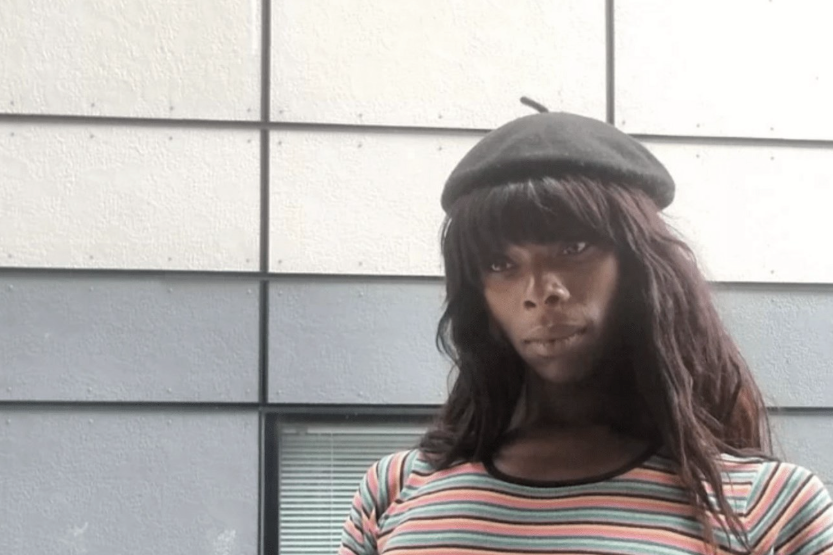
A.S.L. princess
Listen Up
In this episode of The Dugout, we sit down with ASL PRINCESS, a visionary artist, organizer, and founding member of CLASS WAR COLLECTIVE, to talk about the power of queer anger, the necessity of being antagonistic to trans misogynoir, and the radical act of building community on our own terms.
ASL PRINCESS shares stories about growing up in a family with mixed political values, navigating rage as a Black trans person in a violently anti-Black world, and why we don’t waste time arguing with bigots to prove our existence. We explore the horror of defining ourselves through the lens of the state, decolonizing our love and intimacy, and what it means to show up in community—not just for others, but for the past versions of ourselves who needed that space, too.
TRANSCRIPT BELOW…
ASL PRINCESS: [00:00:00] Oftentimes, I think that it's also because there is this disconnect of already seeing punk culture in black thing. We have to really understand proto punk culture. My godmother told me that sometimes comes the best revenge is actually crying over the things that people have done to you. Letting it out like that is some of the sweetest revenge.
You can sit there and relate to your body, say, this thing has happened to me, so, so then you don't have to be a victim. You get to move on.
PRINCE SHAKUR: Welcome to another episode of the Dugout. This interview, I've spent a lot of time editing and. It's wild to have worked in this podcast so much and to be able to confidently say, this is one of my top five episodes of the podcast so far.
It's an interview with a really, really amazing person, a SL Princess [00:01:00] and artist, community organizer and founding member of Classwork Collective. I, I think this interview feels a lot like you just getting to sit down with us and hear black queer, trans folks talk, share the tea gap about existentialism.
So many different things and it feels like a hug. Like I listen to this and I'm like, oh my God, I people, we have people buckle up. Um, this is gonna be a long interview. I'm also felt really inspired while editing this and there's gonna be one or two movie clips interspersed that I feel like really highlight what is being talked about in that section.
And it's just kind of the way that I relate to. I'm exploring media and radicalism right now, so just expect that. And to dig into a little bit about this episode, what does it mean to wield anger as a tool for survival and liberation? How do we move beyond proving our existence and instead build power on our own terms?[00:02:00]
In this episode, we sit down with a SL Princess, an artist, community organizer, and founding member of Classwork Collective, among many other things, including being an amazing DJ and musician, just fucking amazing. If they're in New City, go and see them. We sit down with her to talk about the necessity of being antagonistic to trans misogynoir, the radical act of community building.
And why love when freed from the state's grip and violence becomes an act of resistance. A SL princess takes us through, through her journey, growing up in a politically complex household, wanting to embrace the power of queer and black and trans rage, and refusing to engage with bigots on the terms of fascists and bigots.
And we discuss how the state's definitions trap us in a colonial idea of identity, love, spirituality, desire, and so much more, and what it takes to decolonize the way that we relate to each other. A SL Princess also breaks down the work of classwork, collective, [00:03:00] collective in central Ohio, creating an alternative economy and space for artists.
This conversation is so necessary right now, and so centering and so unapologetically black and trans. And now I ask you, how can we channel our rage into community and care and resistance? And what does it mean to show up for our past and future selves in the fight for liberation? And what does it mean to love the black trans women in our lives?
Now onto the interview, we have our guest. Um, so thank you for being here.
ASL PRINCESS: Hi everyone. No, this is dope. We've spoken about doing this for quite a while and I'm glad it's actually happened. You know what though? Like I had been wondering for so long, like, what was I gonna say? Like what's gonna be in my heart the day of when it just comes up and like we set the date to actually be here and then last [00:04:00] night I woke up at 4:00 AM with thoughts and then I woke up again this morning at seven and I just started writing.
Yeah, it's crazy. It's crazy. So, no, I'm thankful. I'm grateful. I appreciate this. This is gonna be fun and a key watch.
JORDAN: Yeah, absolutely. I mean, you are technically the first interview for the dugout, pre dugout. Never published because I interviewed you at like a party before we published anything for like 20 minutes.
Just chilling on the floor. And here we are a year and some change later.
PRINCE SHAKUR: Oh
ASL PRINCESS: my God.
PRINCE SHAKUR: One of the first questions I like to ask is, what was young you like? Where did you grow up? Um, what were you like when you were younger?
ASL PRINCESS: Ooh. Young Moya was very adventurous. Young [00:05:00] Moya was like the black sheep of her family.
Um, but Young Moya was also like cultivated through like love molded with like love. My mom and I are very close. We're like the ghetto Gilmore girls. Yeah, my mom and I are really close. I told my mom everything. I remember the first time I got my, I remember the first day I discovered an ingrown pubic hair, and I thought it was an STDI ran out of the shower butt naked into my mom's room right before she was going to work.
She was like putting on makeup and I was like, mom, what is this? And she was like, baby, that's just the ingrown hair. She was like, you been fucking though? Wow. And I'm like, no, not like the real stuff. Just like, you know, like the heavy plating stuff. But yeah. But you know what I mean? So it was just like, you know, I don't know.
My mom and I are super close, but, you know, young me came from a, a family of artists, a family of music heads, um, [00:06:00] a family of mostly men. I've had to like really deal with like this hierarchy and patriarchy for a long time. Like my dad was in like. Military, like FBI, he worked in the FBI building. Like he's been all about like servicing
PRINCE SHAKUR: civic service, civic
ASL PRINCESS: service, you know, um, so, you know, having to also find ways to escape out of that.
Having to hear words like negative when I asked for things. Um, yeah, I've, I've found X skate for that at a really young age. I mean, I joined like all the other like weirdo kids in middle school, like the skater dudes, the people who would draw like, like spitfire logos on their like binders and draw Hello Kitty.
The best way they could. Like I'm one of those girls who would then also go to like those Peabody clubs at 14 and 15 and like yeah, it was [00:07:00] like these clubs that were like 13 and up, like 13 to 18.
PRINCE SHAKUR: Oh yeah, I remember those.
ASL PRINCESS: Yeah. And you would go and they would like shut down at around like 1130. Yeah, you have have like a garden or someone come sign to pick you up or whatever, but I would just go with friends and their auntie, like they would be my auntie or whatever type shit.
Um, so yeah, I was, I grew up in a lot of like, like subculture spaces and needed that because that was oftentimes my, my place of refuge. So even in today, like I take that very seriously, you know, like the spaces that I show up and try to cultivate and or curate in condition, you know, with other people who I know who are doing things in the streets too.
It's like, those are my places of refuge. And I think like it's, it's part of the emergent care and I can bring that up later, but I think that's, that is something that has [00:08:00] kind of like. Been through me as a process since I was young because I was like this black queer alternative, you know, like person who found like black queer alternative kids and like, and brown folks and Latinos and Latinx, you know, it was really, it was really cool.
And we would just like hang by the beach. I was in like the east coast in Virginia, but moved around a lot. Yeah, I have family. I have family in New York. I have family in, um, like Atlanta all throughout dc, the east coast, and three of the seven cities in Virginia. Um, so yeah, I, I relatively moved around a lot, so it's sometimes when people are like, where are you from?
I give them this whole story. Uh, yeah, because I never really like, grew up from like one place. And then even when I spent time in Columbus, I traveled often, then had like, got worked with Cirque Ddu Soleil, so I traveled with Cirque Ddu Soleil [00:09:00] for almost five years. Oh, okay. Yeah. Um, I did the light art like tech and VIP specialties for circ and I traveled the world with them for those five years.
And my room and the house that I was living at was just like a suitcase. I would only be home like maybe two weeks out of the year. Okay. So it wasn't until. Probably around the time that I met you was when I became like solidified as like an Ohioan. Okay. Because even though I had been on my own since 16, when my mom left, I hung out with a friend here and just like went to school, came home, then went to college, Fluk outta college, and then was able to work with D Sole through the community that I built here in Columbus.
PRINCE SHAKUR: Okay. Wow. Okay. Do you feel like when you were younger and you were finding all these alternative spaces, do you, what were you looking for?
ASL PRINCESS: I was looking for a place to be, to be Moya, if I could say respectfully a black tranny. I was looking for that. I was [00:10:00] looking for a space where I could come in and be like, whoa.
And like I would be celebrated for being different. You know, and my best friend, like when I recently went home to Virginia, like I linked up with my friend Alexis, shout out to Alexis, who was like, you're just a big girl. Like, she was the one who clocked me. And I'm, you know, I mean, it was, it was Clockable, but that was the first person to be like, wait, you know, to tell me, you know, to affirm it.
To affirm it. Um, so yeah. Um, that was definitely something I was looking for. I was looking for this thing of like, I was looking for knowledge, right? And I think I was always going to have it because my dad though he wanted to perform these civic duties was very into like, anti establishments, actually was really into like Bob Marley, the whalers, like raised me on art that would like soon connect me to like revolutionaries, you know, telling me about like [00:11:00] Maya Angelou, Angela Davis.
Like he was, it's so, it's kind of weird. It's like I'm not ACAP for life and it's, it's real. He was one of the like gateways to that. And then my uncle on his side of the family was a dj, was a jock, and like, true to it, um, like your room, the dining room would be full of record. You wouldn't be able to walk through the house like, um, records.
Um, so it was like getting to grow up in all this culture and, and knowledge was really cool, but it wasn't a thing that was practiced because I think my family got wrapped up in having to like pay bills and, and work. Mm-hmm. And then my mom, you know, wanted, she is, she did become a nurse, but, and through that had a, had a hard time because then it was like my dad would have to.
Take more care of us. You know, my dad would [00:12:00] have to put more emotion and lodging into raising us outside of just providing bread and butter and my favorite oatmeal pies, you know what I'm saying? Like it was, you know, so I, I have to, I also got to see that, which then when my parents split up, it was like, to see my mom be a single mother on top of all the things, you know?
It was like, whoa. Yeah. And I think that's how me and my mom got closer. 'cause we needed each other, you know? We are like sisters, but like, I know better, you know? Um, so yeah. I dunno if I answered the question.
PRINCE SHAKUR: Yeah, yeah. No, it, it did And, and I think, um, I kind of asked that 'cause I do think growing up with, uh, your father around and.
That influence. I, I, I do see black people as a lot of black people could hold that duality or like, there's that possibility or there's that space that becomes possible because they wanna make it possible. So I feel like that's real. And then also, [00:13:00] like, I was just curious 'cause I feel like it's something we've talked a lot about on the podcast, like finding alternatives through punk spaces or, or punk music or, I dunno, skaters or just like all culture, like spaces where, I don't know, like I, I think black people kind of have to go sometimes as like a, a gateway or something.
I don't know.
ASL PRINCESS: But oftentimes I think that it's also because there is this. Disconnect of already seeing punk culture in black things. Mm. Mm-hmm. Right? Like we have to really understand proto punk culture and then what punk culture actually comes from and what it stems from. You know, like I went to go see the Afro Punk movie here with some friends of mine and met up with James Spooner, who was the per person who produced and filmed the documentary.
And I asked him, I was like, well, where do you think Afro pessimism shows in your art? Like, where do you think you see this true rage and revolt that comes from blackness, [00:14:00] not from an energy that you were used to seeing in this? Just like, I'm gonna obtain knowledge through a sense of self and anti-establishment, right?
Like outside of only seeing community as a form of, I hate to say it as capitalism. How do you see as a commodity? As a commodity? Right? How. Do you see aro pessimism showing up in your work? And he said, I don't know what that is. And I gagged, I gagged like, ha gagged.
PRINCE SHAKUR: What do, what do you think that do? And, and I guess it's like, are you kind of speaking to the fact that like, black people participate, but we don't have like, I don't know, I guess like a more updated logic around it or an updated or Well, like what do you feel like you've got from that?
ASL PRINCESS: Well, because let's use hip hop as an example in communities that are around hip hop, and also let's talk about gang culture. I am very pro gang culture, right. Um, that is very punk to [00:15:00] me. Um, you can go to the hood right now that is quickly being gentrified and see the effects of these kids who are listening to like the trap opium music, right?
Like the, ah, hey, my life. Like, you, you, you can see that in the hoods. You can see it. It's, it's, it's bare, it's burden and bear and it's like. You have to think about the communities that those people and the these kids are making for themselves to sustain. That is punk culture. Yeah. But it's being negated as mu as such because it's niggas and it's being negated that such 'cause it's not marketable And what's more marketable white people doing shit.
Yeah.
PRINCE SHAKUR: I mean it makes me think about, I don't know. 'cause even we're doing like a, what is black anarchism episode and I was kind of talking about how I feel like I found anti-authoritarian kind of ideas or feelings before I found [00:16:00] like. Punk shows and the music and, and so, and in what you're saying, I feel like I feel and detect a lot of that.
'cause it was like, in middle school, I was best friends with a dude that only read Naruto and Death note and could only talk about that. And then in high school, I was friends with all the bisexuals who also were really into suicide silence. And even though I was a square, and so it's just like, I don't know.
So it's like, I, I I feel a lot of what you're, you're, you're saying.
ASL PRINCESS: I mean, and then also to speak on like black anarchism. I, I oftentimes were as associated with people who would be rah rah anarchy, but would not include blackness in it. And it's like, how radical is your space if you don't have black people in there?
And then how radical is your space if you don't have black queer people, black queer, trans people there? You know? And it's a thing that I will always see as this, like co cognitive dissonance. There's a dissonance. There's no rhythm in. [00:17:00] In this thing and not to like shit on James Spooner. Right. I think he did a good thing by creating this movie.
Right. I think he did a good thing to, um, speak something out into the Omniverse and say, Hey, I'm going to create a space for black punks to like thrive and express themselves. And then there's a whole festival comes out of it and you know, like I am proud of that man for doing so. Yeah. However, I think a lot of that work stemmed from this like cultivation and, and, and love for expression in a predominantly white space, you know?
And I think that was the disconnect when you then yes, you see yourself as being like someone who is experiencing microaggressions. Yes. But you are also a very light-skinned passing black man in this punk space. Who have you got to. You got to experience a lot of that because of that. Mm. You know, so it was like, let's break it down.
We was in the DMS trying to talk about it. I was like, I don't wanna give you no tea [00:18:00] unless you wanna
JORDAN: put me in the writing credits for your next movie. Yep. I mean, one thing I feel with Afro pessimism is that it's something that's largely understood but not named. Um, and especially 'cause I think it as a named entity is kind of academic.
I mean, the amount of times I went through, I mean this, we talked about this on the, or last Effort Pessimism episode, which is how many times I like kind of, I read a sentence that was half a page and broke out laughing. Oh wow. And was just like, this is hilarious. This is kind of dense, but it's also a spit and facts and it like should be studied, should be read.
And that's how a lot of books are and could be. I feel like the idea is more approachable than the things that folks reference it for. So I'm kind of curious, what did you see as an Afro Preist view in that film?
ASL PRINCESS: Well, I saw that even though black folks thought that they had a safe [00:19:00] space to be themselves, they realized quickly that classism changed the aspects of people's relationship.
They saw that they really didn't have community and alliance with these white people. They quickly realized that real, you know? So it was like, wait, why? Why didn't I? I'm surprised that that wasn't his answer when I asked him that. 'cause it was one of the things that was pretty like fluent through the film.
But there were also some black people who were also very against the idea of being black and then also thinking that their blackness. Was not a thing. They didn't care enough that their blackness could be stripped away from them because they wasn't really connecting to their blackness. It was like so deep.
It was so, I was so upset, especially as like a black trans woman who's come up in the punk scene, but has also been one of the blackest people [00:20:00] in, in the space, in the room, you know? So it's like, I, I, I really take that dearly because I know other black people who also have to take refuge in these emerging spaces.
And I say that because there's a lot of knowledge that is obtained, you know, and a lot of these places were these no place places. The, what do they call it? The under commons, right? Like the under common are the folk who are literally doing the work to call out a thing, to try to name a thing, a thing, an oppressive and suppressive force.
Right. So it's like you see also the anti-establishment crew also kind of like resembling an energy that traces along the lines of like, um,
JORDAN: there's that phrase like, the barbarians of today are the tax collectors of tomorrow kind of
ASL PRINCESS: vibe, right? Yes, yes. Okay. Yes, because, and because of that, like, but finding refuge in the emerging spaces.
Yes. And, and, and [00:21:00] like, and I was gonna say that there's a knowledge that is obtained from that that usually wants to get like, snuffed out. Mm-hmm. You know, or that usually gets snuffed. That usually gets like snuffed out by set of pestle forces. And sometimes those people look like you and me. You know,
JORDAN: some of these first time I ever had wage theft was at my first black owned vegan business.
ASL PRINCESS: Yo, that's crazy.
JORDAN: That is,
ASL PRINCESS: that is crazy. Not the vegan spot. We love Columbus. We love
JORDAN: the
ASL PRINCESS: food industry. Actually don't love the food industry. You know, like all of that is like, do you know like two families go through and sift through all the food, the ingredients and everything that we like, we we eat.
They look over all of that here in America. I found this out from one of these, one of the guys that used to like tattoo, he like studies tomatoes. They're really cute. Oh my gosh. That's dope. You know what? [00:22:00] What do you know? Okay. No
JORDAN: I don't. But that used to be one of my goals. I remember I took one of the like,
ASL PRINCESS: he's
JORDAN: so cute.
ASL PRINCESS: This cute. Oh my gosh.
JORDAN: He, they pronoun, but yeah, they're so cute. I remember I used to want to be a tomato farmer because I was like, if all else fails in my life, I'll study the genetics of tomatoes and here I am still kind of interested in it. Spill
ASL PRINCESS: the tea. I mean there. What is that? I love tomatoes.
Tomatoes are very queer. Do you know that like tomatoes can like make themselves Oh mm-hmm. It's really cute. The season, everything that they haven't said in them can like produce. It's kind of like the idea, like there are a lot of, um, there's a lot of knowledge and books that have been lost through the dark times that express that like black women in the day could birth their own children.
JORDAN: It's official tomatoes are fruit.
ASL PRINCESS: You know what I mean? Food as fuck. Exactly. See, so actually shot up, like, I mean, we love food, but like,
JORDAN: yeah, no, the food system is fucked. I mean, there's, there's so many things to [00:23:00] address, but I mean, you came with an agenda. How do y'all feel about
ASL PRINCESS: people finding the will to say that this isn't their problem?
Like, some of these issues aren't their issue?
JORDAN: Mm. I I'm always curious how and when it comes up for people to say that. 'cause I always, I love it. We. Because there's like that same love when I hear some of my friends like, I deserve to be more selfish. And I agree that they do because I also know that there are multiple times where they won't say that something is their problem and they'll be like, this is the human issue.
And solidarity drives me to act in this way, to sustain myself and others. And I do think that a lot of people actually don't do that enough and maybe try, and I think this is pro a problem in America and just like where [00:24:00] we are socially is that sort of solidarity and mutual aid is contained and forced into family units and it can't go outside and anything.
And then even that is a strained relationship and people's call to tradition to have that sort of relationship. But I do think, yeah. Yeah. What about you Prince?
PRINCE SHAKUR: Um, I think a lot of things in response to that, but I guess I think about trauma. I think about, um, how, and this is at least how I read it, like if I think of like black people and how we treat each other and treat ourselves, and I think when we have healed through more of our trauma, we're able to look up at the world with more, we have more capacity to, to empathize.
Even if it isn't your problem, you could still engage with it or, or have thoughts around it or figure out how it relates to you. And, and of course it depends on what the problem is. When, I guess, when I think problem, I think like is it a collective [00:25:00] problem? Is it like a community problem? Is it, what kind of problem is it?
Because where it lands on the spectrum, I think kind of distinguishes it. Blackness and how much black people have been through and how we can worry about ourselves. Have we even got out of this fucking hellscape loop? How much, how, how hard we have to look forward if we even want to have the hope that we're gonna survive.
And how looking forward so much. I dunno. And, and, and I say trauma 'cause it's like this past month I feel like going through my grieving process, um, I find myself being a lot angrier than I want to be. And what do you do with that until it's over? I think
ASL PRINCESS: you gotta really let that use you until it's over and to then to give yourself the choice whether or not you wanna forgive him or forget and move on.
Because I think using that anger before forgiving anyone or anything is something that you can use to actually better [00:26:00] yourself and make yourself strong. Good.
PRINCE SHAKUR: Prince here to take a break from this episode to talk about the fact that in this interview, what Moya is saying here about the power of anger. About moving through it rather than suppressing. It reminds me of one of the most powerful scenes in one of my favorite movies of all time, Moonlight. It's a scene that I actually sort of confronted in my own life.
Only a week or so after we recorded this interview in the scene in Moonlight, the main character, shaone, after years of swallowing his pain finally confronts his parent. It's heavy, it's real, and it helps both Shaone and the viewer realize that in Shaone facing his anger, he begins to find something else on the other side, a different way forward.
Here's the scene.
NA: How you been? [00:27:00] I'm alright. I ain't sleeping. Why not? If you, you, it's bad dreaming still.
You ever thought about talking about it with somebody? I mean, maybe not even a counselor. Maybe somebody like your mama.
Yeah. Yeah. It sounds funny to me too. I
have you talked to Theresa?
Yeah.
How's she doing?
Good.
Good.
When you go home, home,
it is home. You, I, I mean, they allow me to stay and work as [00:28:00] long as I like. I feel I as well help other folks. Keep myself outta trouble.
PRINCE SHAKUR: That's good, mama.
NA: Yeah. Yeah. I think it is too. I really do.
So you're still in them streets.
You come all the way to hell to Georgia to have you falling into the same shit. I wrong. I'm gonna go No, no, no, no. You going listen to who ma Huh?
PRINCE SHAKUR: To you
ASL PRINCESS: really though.
NA: Jeez, please.[00:29:00]
I messed up.
I mean, I fucked it all the way up.
I know that, but your heart ain't gotta be black like mine, baby.
I love you Sharon. I do.
I love you baby. But you ain't gotta love me. Lord knows I did not have love for you when you needed it. I know that. So you ain't gotta love me, but you going to know that I love you.
You here.
You hear me Sharon?[00:30:00]
I hear you mama.
I am sorry babe.
I'm so sorry.[00:31:00]
ASL PRINCESS: Now back to the interview with Moya. Give yourself space, grounding and solitude. You know, I feel like they have told us like anger was such a bad thing, you know, and it's not. I think that would help us also see other avenues of coming to this, like coming to do, do, do, do, do. Like collective care after, like conflict, right?
Like I was telling someone that like, my trust in people, which is very slim to none is a thing that does keep me from like, resolution, conflict, like con, I mean conflict resolution. Um, I, I'm afraid to show up vulnerable in this space and I mean, I can, I will always be honest. Mm-hmm. However, there's [00:32:00] definitely a space in me that will preserve a lot of my own understandings to people Please.
And or to, how do I say, not make the quick avenue, the quick direct, um, how do I say this? Like, uh, I just wanna be able to develop a practice, be beyond, beyond suppression and oppression. Yeah.
JORDAN: I think it's ins we live in a, like a social culture where it's more incentivized to not show up fully. It's harder to be vulnerable or for that process to be a lot slower expect, even though, 'cause if it was a bit, if we were all quicker, a little quicker with that process, we would be able to show more authenticity quicker and get to the root cause of things faster.
Mm. Because
ASL PRINCESS: Well I have [00:33:00] ano, I have another low key question under that. 'cause you hit something for me. Yeah. Are y'all ready to stop being American or No? Legally.
JORDAN: Okay. So to be a gun owner in America, you can't run out the arrested ship. That's true.
ASL PRINCESS: Are they? They'll give us that 800. They, you know, you can do that.
And also they'll give you like $800 a month to like be like an un-American citizen here. This dude I was dating who was in the military told me about this. Who was, it was like this right wing grifter dude. I had to like him off. I'm like,
PRINCE SHAKUR: wait, what did he tell you?
ASL PRINCESS: He told me that you can literally sign away your citizenship and they will, America will give you an allowance to be here.
But you, you just don't get to be a US citizen.
JORDAN: Yeah, no. 'cause then they get to, because then if I don't have any other citizenship, if then they get to, if I'm, 'cause my thing is I used to really want to be stateless until I realized that's how they hold you in Guantanamo Bay. [00:34:00] Like if you don't have any other sort of.
Uh, state to, to Kate, take you or anything. They don't send you to normal prison. That's how they got that one. Uh, that one dude who now finally is out after 20 years, the one person, 'cause no state would claim him and they thought he was behind and in some queeda stuff and he was just there and he's been tortured for last 20 years.
Um, Sean. Yeah.
ASL PRINCESS: Yeah. We can Asana, come home. I mean, because I mean, I say that because it's like, are we, are we, are we really gonna be conflict avoidant then? And just be like, what? You know, like, are we gonna let Gaslight America soothe? Like the, the gas, I like a good gas station. I love the smell of fumes, but I'm not gonna like, let Gaslight America tell me that this is gonna be, this is, it is.
Yeah.
JORDAN: And I think breaking through and like being more vulnerable and what I like what, 'cause what you're saying about anger, it makes me think of this essay by two black about laundering black rage in America and how it gets laundered and subverted and co-opted [00:35:00] and how if like the ability to show up and then actually be able to use it and be honest with our rage and be more productive with it, therefore allows us to be more honest and productive with other emotions and not having it be too conflictual with the ones that it doesn't have to be like actually being able to have that space because like, we're not incentivized to show that rage, especially as black people.
NA: Hmm.
JORDAN: So being able. To work through those. Like that's what I'm, like what you were saying earlier, like that street culture that is punk of course, but it's not really called punk.
ASL PRINCESS: I know Reverence and PE preachers who would tell us that they call punk these gangs know more about building a system for ourselves than most people.
Most org, most organizations, most people who go out there and say they're in the mud. And I believe that as someone
JORDAN: working unregulated. Yes. I mean I,
PRINCE SHAKUR: I think it's something I was thinking a lot when I was writing my book and researching my family and all the men in my family who were in gangs or my uncle who was an assassin and all this legal shit they did [00:36:00] and, and I mean, I look at it in a lot of ways.
I'm like for a lot of the men that my. Dad knew, it's like that was their way to get to the us. That was their way to get an income. That was their way to, to break through the protocols of like the US immigration system and like start making income. And granted, I still always look at it through like a gendered lens.
'cause I'm like, how many women were slinging drugs in those gangs? Or like, I don't know, getting locked up and abandoning their families or whatever the fuck. It's been really actually really healthy, like to your point, because I've kept asking myself, what the fuck are you holding onto? What are you holding onto?
And I keep thinking of that Audrey Lorde essay Turning Silence into Language in Action and how I've read it a couple of times and I'm like, have I read it? And then I and I, and then if I keep thinking about what am I holding onto, then I think if I can ask myself that question and I can feel that weight.
It's something that's been holding me down. It's something that's been telling me, you're this kind of person and this is how you [00:37:00] show up in the world. Yes. Being black and queer
ASL PRINCESS: is so fab. I feel like those are like the God's gifts, special keys to the girls and the folks who are here as like follow true fallen angels to like try to, I don't know, be aware I'm in my own fiction world right now with this, but it's like, and I and, and when you, going back to what you said earlier, I do think that there is like this experience where we are coming to realize it was like, was an, was blackness ever included in anarchy?
Right? Was it ever included in abolishing anything? You know, we gotta think about people in like the 1840s who were trying to work against abolishing slavery, but then was like, wait, what about white labor? You know where in that form? And anarchy can't show up as like peace. It has to show up as.
Revolutionary. Something revolutionary otherwise, right?
JORDAN: There's this quote, I can't, I don't remember who said it. [00:38:00] I think it was Luigi Galliani. I want no part of your war. I want no part of your piece. Revolution. Now that's it. And it's like, yeah, that, that's where I'm like, that's what we need to move
ASL PRINCESS: forward.
So yeah. So by the way, the person I was referencing, I think his name is like Herman Craig, her Herman, he was like, he was like the, he was a proto socialist. He was one of the people who were on the team to like really abolish slavery. Like he did want to do this, but then it was like he went up against all these people and then it was like, wait.
I'm white and then we gotta think about white labor. Mm. These people aren't gonna want to take care of the, no one's gonna wanna take care of the poison. Mm-hmm. You know, like, who was, who's gonna do that? And it was like, damn, that's still how they're talking about labor now. Like what? So wait, get into it.
So then how do we, how do we talk about like, people honoring Luigi? Like all folks who honor Luigi don't honor universal healthcare. Right. So I think, [00:39:00] I think then we have to talk about what healthcare could actually be. You know, we are talking about merging the ideas of like gender identity with.
I don't know with like things that some people just really can't grasp because they don't have the time and space to obtain a certain knowledge coming from the under commons. Right. The under common spaces, the no place spaces that are very socialist.
JORDAN: Well, the also that sort of education that is being actively fought out of public schools, an institution that's supposed to be just okay, we all should have some basis knowledge.
What do you mean we can't say pronouns in K through 12? I can't call her Miss Apple bottom. I can't say Mr. Apple Jeans. Like, what do you like we can't talk about, it's just how, this is the Social war and [00:40:00] actual attrition that we're dealing with right now
ASL PRINCESS: and Right. And so as I mentioned before, yes, I'm a black trans woman.
Right. However, I don't want, I don't want. My fellow constituents, brothers and sisters, right, to get on platforms and start humanizing themselves for simply speaking out and calling a thing a thing. Right. I should not have be, I should not be attacked for saying there is an oppress of force. There is a thing here and calling the thing a thing.
Right. And I think if we're also speaking about healthcare and pronouns, there are a lot of people and trans people who voted for Trump, who are like. The right wing Grifters talking about how they care about children and the anatomy of children. Right. And it's being used like that propaganda was being used highly.
It was even sent to me by like a [00:41:00] guy I was dating and I was like, word, are you serious? Do you think I would n actually care about this person who Detransition was paid by the Republican government to say that they wish they never transitioned?
JORDAN: Allegedly, according to statistics, only 1% of trans people in America are out.
I would like to
ASL PRINCESS: say to those people, those right wing grifter, Chinese and TriNet also I guess a big up to, to Bruce Jenner, right? I guess if you gonna call it thing a thing. You know, because, you know, she is all about like, oh, I'm so excited. Are you here? Do I'm like, girl, he's clocking you. He clock, he's that, that man, that man is gonna call you a homeboy.
Yeah. You or Bruce. Yeah. You or Bruce to that man. Stop playing my sister in Christ. Talking about the people who are gonna big up Luigi, but not think about the ways in which I [00:42:00] have to show up and the things I need to show up. You know, like if you are not someone who's like, healthcare is a major part of their gender identity, I want y'all to shut the fuck up.
Like shut the fuck up. If all of it, if all it took was for you to change your pronoun in your workspace, no shade that I'm, I'm not excluding anyone and I'm not. Taking anyone's transness away from them. However, there has been a, a huge space given to people who wanna lock people up for not calling them Z and z.
That's not niggas, you know what I'm saying? No, it's not. No. It's so if you, if you are, if your healthcare isn't a major part of your gender identity, shut the fuck up. You know, especially if we're talking about what's needed for trans people in a time like this. Shut the fuck up. Shut the fuck up. Because it's like the ways in which we now have to show up for each other.[00:43:00]
It's a big trust thing. And that's how I, I, and we have kids to raise, we have kids to raise, and we need things in order for that to happen.
JORDAN: We need, things need to happen and folks have current needs and the stressors are getting worse. And I think. Something to ground a conversation about futures and, and imagining what radical, truly transformative healthcare practices and community and grassroots efforts could be is looking at the times when the public healthcare or healthcare institutions have been taken over by communities and then implemented and still ran by those who have the knowledge to do healthcare, but then administered by community members who increase the capacity of the healthcare facility that the people running it before we're not doing, like I'm primarily thinking of [00:44:00] the Lincoln Hospital with the young Lords taking it over and then them having more programs during and after than before the takeover with on the ground people on the ground being like, we're dying of, I believe TOIs.
This is what we're gonna start adding. And those on the ground communities organizing for themselves and federating with other peoples that are organizing for themselves and being able to. Create and build institutions that actually serve us and are led informed. And the decisions are made by people who are impacted and are, have been impacted by decisions of that institution.
And that's just not the systems we have now, but it's what we could build for. And it takes, like you said, a lot of it takes stress for us to be able to take our needs and give 'em to other people and allow other people to input on them. Because a lot of people wanna,
ASL PRINCESS: they won't do too much. I understand why when I was coming up, coming up in, um, you know, being the booted woman that I was, I can understand why certain [00:45:00] things would probably like get gate kept from me, you know?
Mm-hmm. I wanna have to, I want us to still be able to have spaces to obtain and circulate this knowledge. Right. And, you know, I've understood and know that. Our lives are very sacred. We aren't just like, we are ordinary people, but we're not like a trend. We're not a fleeting moment, you know what I mean?
We're not just like, we are real people. Some of we are lawyers, you know what I mean? We are doctors, you know, we are teachers, we are parents, we are mentors. Yeah. Like, it's, it's, it's an, it's an important thing. Um, and we hold also just being queer and black, what I was mentioning earlier, shout out to it because those are two big, heavy keys and some people do not know how to open.
Doors with those. Yeah,
PRINCE SHAKUR: I, I mean it's, I'm thinking about a lot of different things, but I'm thinking about, like, a few mornings [00:46:00] ago I was like crying to my mom and being like, I'm scared about my future and if I'm gonna have kids and I wanna be a dad. And, and then she was kind of trying to comfort me, but then she was also saying the things that parents do where it's like, oh, you could get like a salary job and then like, you're gonna need a house.
And, but then one thing she mentioned, 'cause I think she looks at my life and is like, you're not reaching for certain things economically. She said, I feel like you're wasting some time. And when she said that, I was kinda confused because I was thinking the fact that I'm alive, that I am wide awake, that I feel that I'm angry, that I'm confused, that I'm doing all these things to be present in a world that tells me to just erase myself or, or whatever it is.
And, and I, I think about the idea of wasting time and then like, to your point with everything that's coming. The normal version of life that everyone tells us to live. To me it's actually wasting a lot of fucking time If the government isn't gonna fucking save you or anyone else, or they're shipping people off into [00:47:00] fucking camps is how like our world is gonna change.
And I feel like to, to your question about like Luigi and people are about it, but they're not really, I both envision authoritarianism and all this shit getting worse, but it's also gonna push certain pockets of people to really resist more and that resistance is gonna bring more anger and in on a weird, ideal level.
I think more people just have to be fucking confronted with the fact that you can't trust this shit and it's collapsing right all around you. And you can either join the people trying to fucking help and help each other survive, or you can watch
JORDAN: trying to help each other survive is like a grace point we need to have with each other.
'cause I think especially. Especially as an anarchist. I think in the future, looking back on this moment, there will always be people saying people aren't doing enough and it may be valid. [00:48:00] Like we're not organized into enough strike groups to take down every single fascist as soon as they try or as soon as they are actually just trying to operate the current government that that they have right now.
So I guess technically we're not doing enough. Is that technically a solution? I don't know. On top of everything else that needs to be done and organized to have a decolonial revolution? There are, but there are other graces that we give each other to move forward and not just sit and stay stagnant or,
ASL PRINCESS: that brings up a lot about how I feel about like my political knowledge, right?
Used as a tool to then give me the time and space to like. Again, like curate an art space, right? Throw an event, throw events for C3, throw C3 events for nonprofit companies, right? Like I've been able to be blessed to give [00:49:00] myself slow, slow down time and say, what can I use that's surround me right now to from my highest good?
We gotta think about why some people aren't able to do that, you know? And that's another reason why I ask people like, are y'all ready to stop being, are y'all ready to kind of give that up? Because when it's in the body,
NA: yeah,
ASL PRINCESS: it's nothing. No one can really actually tell you to do the freedom that we need.
We don't have the, we don't have the words for it. The English phonetic really makes sure we didn't have a space and time for that, you know? And shout out to AIF who taught me that it is, it's a blessing to be able to have time slowed down for you. You've like sat down and meditated and done the work to like, think about the care for how do you weaponize, how do you use your empathy as a weapon?
How do you let the tears that you form when no one is watching? You [00:50:00] know, the tears that you form in like are held by like your ancestors or guardian angels turned into the sword that will cut the enemies of your, like the neck of your enemies. Like when, when you have space to do that and really mourn, there's power and mourning.
There's power in grief. You know, my godmother told me that sometimes she was really, she was really strict about it, but she said sometimes the best revenge is actually crying over the things that people have done to you letting it out. Like that is some of the sweetest revenge. You can sit there and relate to your body, say, this thing has happened to me.
So, so then you don't have to be a victim. You get to move on, you know, you know, I want people to remain vigilant in that way because what do we need? I, we need that grace we deserve, we, we deserve a [00:51:00] lot. And I think we owe each other everything in this now, like more than ever. And I think we have to tell people that.
Some people like, oh, I didn't ask to be born and like da, but babes, unless you're an N PC honey, they are gonna tell you who you are and what to do. If you can't do it for yourself. Yeah. And people who are like us are the ones who are finding refuge in these emergent spaces. Like nightlife is an emergent space.
You know, there's certain knowledge that is obtained through like community in those spaces where community is not currency. It's not capitalism, it's action. When people see me, there is an action, there is an effect that happens in the back of those people's brains that goes, whoa, this can happen and this exists and it carries this energy.
It might, they might not know that I am knowledgeable of things, but I also hold a certain grace to myself that makes it go, whoa, who is [00:52:00] she? You know? And that is for a reason. You know, it's for a big reason, you know? 'cause I could be just like any other supreme bitches and just be in the house and be with my little cauldron and keep it, keep it a being.
You know? I'm a mother of the night. Uh,
PRINCE SHAKUR: yeah. I mean, you're honestly speaking to my spirit. 'cause
ASL PRINCESS: the
JORDAN: socials
PRINCE SHAKUR: I'm fighting the winter blues. I'm fighting the, but I, I feel in what you're saying, like. Taking that time or fighting to build that space, and especially for like queer and trans people having to fight for that interiority when you're young, when every single fucking thing in the world is telling you who you are, what you are, what you're supposed to be like, and how that's a constant process of like reaffirming that queer or radical or more militant way of showing up in the world of, of, I think it's really powerful to your point, when we tap into it, especially during times of crisis or resistance or just intimacy or vulnerability.
[00:53:00] And I feel like that's one of, it's one of the many things. It doesn't come without a cost, but, but everything has a cost. I'd rather suffer in the particular ways that I do than be something else that I started being a long time ago and I never checked in on and never reshaped or. Changed my path or something.
And so I feel like, um, how would you describe your radicalization process?
ASL PRINCESS: It happened the second time I got locked up. I realized I was in a room full of people who were like not supposed to be there. It didn't matter, like what they really did, did, ooh, I hate to sound corny. God wanted me to see this and move with that.
Like move with like, I don't know, implement the movement of an ancestor of some sort. Like tap in because what you [00:54:00] were viewing right now is, is, is, is, is nasty work. You know, regardless of what I got locked up for, regardless of how many, and I wasn't, I think I was like locked up for three weeks. I was considered a flight risk 'cause I had a warrant out for my arrest.
I got locked up on a college campus, my college campus that I was attending. Why security cops, security cops detained us, but they were also able to run the night. They were able to run our fifties. And I was like, what? It was the spookiest. Yeah. That was the second time I got locked up. The f We don't need to talk about the first one 'cause I'm a lady now, but, uh, I, I met people in the field where I was locked up.
Shout out I guess Jackson Pike or whatever, you know, the thing. But I was there for three weeks, you know, just there I was, I was a college student, I was missing class. I didn't tell a lot of people. I, I did. I mean, I did have to tell [00:55:00] my advisor. Shout out to my advisor though. My advisor was one of the people who got me my job to cdu sole 'cause she understood my struggle.
But yeah, I think but like you no big up to Art Abi and fuck Abi. I was just gifted with this site, and as I was seeing this thing, I heard a voice that was like, none of this needs to happen. And then coming out, I met more revolutionaries. I met people who were talking to me more about like amendments and I was like getting into the work.
And that's what got me in this, like, that got, that's what got me into like activism and that's what got me, you know, into all of that. Literally coming out and being like, whoa. I met people that were in the field, out of the field again, in the field. But like, and I mean like, I'm talking like, like a before and after, they'll be like, wait.
Yo. And we'll talk and we'll still speak. 'cause like, I mean, I met, I met people and then when we were talking, I would, you know, they [00:56:00] would check us, you know, and it would be like, you know, what are you in here for? I was in for some petty shit, my warrant and whatever, da da, and, you know, the way I was speaking, obviously, it was like, oh, like, oh yeah, you in college.
Like, you know, but it, it, it wasn't, I, it wasn't because I felt protected in a space. It was that we were able to have a conversation and we were actually arti, we were actually able to articulate a praxis of like, black anarchy and, and captivation. Okay. And I think that was when it was like, whoa, this is definitely like a process of what revolution needs to look and feel like.
Mm-hmm. You know? Yeah. Because here I am, this queer person locked up with all these, and mind you, lunch that day, I saw two niggas getting knocked out for not passing up their tray. Like, let's be real. Even with the beard I gave around the wave filet, they knew how to treat me like a queen around the wave filet, around the wave filet baby.[00:57:00]
This this space where I got to see like, whoa, there are, there is a multitude of systems and there's definitely multitudes of care that we need to get out of this shit. 'cause they playing a big game on all of our tops regardless of race. And I guess we gonna see that now the, these people gagging, white people
JORDAN: gagging.
I mean, I've been saying this for a while. Leftists ain't starting a revolution, y'all. We gotta survive, collapse. We gotta survive the dissolution of America. Carve out, not even carve out, but hold on to the relationships that are sustaining us now and build Decolonial revolutionary ones. Hey listeners, this is the dugout and we're all about sharing black radical history and ideas to spark learning and action.
If you've gained something from these conversations, you might wanna consider supporting us on the Patreon, your support helps us cover production [00:58:00] costs, bringing on amazing guests, and creates resources for deeper education. Plus, you'll get early access to the interviews and exclusive reading episodes.
Head to patreon.com/the dugout pod and join to keep this work going.
ASL PRINCESS: And, you know, to go back to these intimate spaces, you know, we have to really learn what the care is. The grace is important, um, but we also have to. Care for like the elder spaces before us, regardless of the generational, because I know that is a thing that gets in our way. Um, what do you mean
JORDAN: by the
ASL PRINCESS: generational?
JORDAN: How do you see that showing
ASL PRINCESS: up? There are still like black democrats who are like in the black Christians who don't necessarily have a space and or see it for a particular type of people. Um, and if so, it's been very fake, you know? And not to harp on Christianity too much, you [00:59:00] know, I'm a Christian witch myself, however, I, I know what it's like be to be othered, but then also see these people not be accountable for the energies that they put out into the universe.
Like, I've seen preachers speak out about killing in God's name, and it's like, yo, what? Excuse me. A lot of that stuff isn't fair to people who wanna find safe spaces, but then are really understanding to what's going on in the world around them. Again, being able to articulate the praxis of all of this.
Yeah,
JORDAN: I mean, you're deeply embedded in a lot of creating physical and emotional spaces for folks to either convene, enjoy themselves. What do you feel like you to be a part of creating that feel like is [01:00:00] essential or has to be there?
ASL PRINCESS: But I, there's, I, you know, there's a col I think there's a lot of a collective care that needs to go into that.
I think there needs to be a lot of breaking down of like these isms and sinks. Like I was just in a car with a guy with teardrop tattoos who you would never think would wanna just actually have a conversation about like, music, right? We gotta think about looking beyond the, I like the, the physical identities of some people, like how they show up and really get into soul in the character of someone.
Right? We've all learned a struggle, and if you're ever up, uh, to a certain age, you've, you've understand karma in a certain way, right? The loop of the hell, the loop in hellscape that we are currently in. You've gotten to experience it now, you know, you've gotten to also hopefully understand the ways in which you've reciprocated some of that energy.
JORDAN: Some people don't understand. Some people are just like, it's karma, it's magical, it's spiritual. I don't, I don't understand it. It just happens. And I'm like, it it is. But [01:01:00] it's also, like you were saying, accountability. It's like you go and if you practice being unaccountable for so long and the shit just keeps smacking you, we smacking you back in the face and consequences keep coming outta the air.
You're just like, that's gonna lead to a certain type of attitude. But like, like how do you, how do you feel like you can get to the level of recognizing that?
ASL PRINCESS: I think it's finding people who are wanting to, who want to move in their highest good to live otherwise. So I think to go back to your question, like what do you think it takes to cultivate these kind of spaces?
I think it's like putting your, it is you putting your trust in community. There's other currencies other than the monetary currencies that you have to spend in order to make these things happen. That stuff's not easy. Some people just think like, I'm, I'm, I'm cute. I can post a, a selfie, tell people to show up at this address and we have a party.
It's not always that easy, you know, there's competition, you know, and even if it was just about that and not about me and my talent, right? Not about me and [01:02:00] being very strategic about the people I want to invite and bring into these spaces, right? Rev, like, you know, be sexy and silly and radicalize and revolutionize these spaces, especially black people.
Mm-hmm. You know, it's important. And I wanna find those people who are willing to express themselves. Underground or otherwise, you know, I was blessed to be with folks in community who wanted to throw parties for people who couldn't express themselves out in the open. So what you are portrayed in the dl come to this party and come kick it.
Yeah. You know, like that. It was kind of like, you know, if I, I don't wanna say too much, but if it was like, if I could be the, if I could be the mother, the mother or madam of a community, how would I tend and care to this underground punk space? Yeah,
NA: absolutely.
ASL PRINCESS: Something revolutionary, taking it out. Do what has to be done.
Done. Exactly.
JORDAN: I think there's [01:03:00] something I've been kind of recognizing with a lot of my community now, which is there's a lot of emotional labor and work to be done.
NA: Mm-hmm.
JORDAN: Especially in community and it feels like a lot and that's 'cause it is. In this regime, there's a lot more. And I think recognizing that it's not fair.
Like it's not fair. It is oppressive and there is more emotional labor that than we should have to do to move through and hold those spaces. And that's what makes it stand out as well, I think in those environments and in those spaces.
ASL PRINCESS: I agree. I agree. It's heavy work. It's heavy work, you know, like so especially now since so many people are on their phones, you know, I'm glad that some people are learning to divest from social media.
Not even the person, the Lyft driver I met, he was like, man, I need to get off of my, I need to get off of [01:04:00] Facebook. I need to get off of my phone. And I love that he was, we were engaging in conversation regardless if we were flirting or not. Like I love that we were talking about. Engaging in having personal conversations and trying to divest from the surveillance system.
Right. Because that's what this is. Now we have to find something else to invest into. And I think a lot of that has to be done by like this. Like
NA: yeah.
ASL PRINCESS: Gimme your hands like this. Just holding hands. No, literally like a physical situation. Yeah. Like a being in spaces with people, being in new spaces that you've never been in before.
Yeah. With like an open heart and an open mind, regardless of your religious background, you have to understand the world around you. I love Jesus too. You, Jesus. Shout out to, shout out to Yahweh. Yahweh told me, yo, look at the world around you. They gonna play on, they gonna play on your loves left. The connection that you have to God, spirit, they gonna play on your top because [01:05:00] they're conspiring against you.
Mm-hmm. They will conspire against you. Yeah. And Jesus walked his cross.
JORDAN: Okay, so you're telling me all it takes is 12 people and we can conspire something that will last generations and inspire. It's
ASL PRINCESS: big, you know, and I, I think that, I think we also have to come to terms with like, we all, we, we all don't know every fucking thing.
And that there should be some beauty in that. But I'm not gonna sit with the nuance. No more nuance. What do you mean? I brought, I wrote this, I wrote this somewhere, but I feel like, well, 'cause I feel like, I don't know, I feel like it's not sustaining. Like I feel like we can't just be the, we can no longer continue to be the devil's advocate because I think it takes away from the strong point of an idea, right?
When I tell people that trans rights are under attack, but that also means your rights are under attack. The new one shouldn't be, well, I don't know what it means to be trans. I don't have to, I don't [01:06:00] have time to get you to understand why you don't understand me. As I show up in front of you, it's been my life's work, so I can't, I can't get
JORDAN: burnt out.
I think that, I think that's a very important for people to understand is that you don't have to be the one extending an olive branch in teaching people. Somebody will, and if that's not you, don't do it. Don't sit with that nuance with people who, who aren't gonna actually, like, you don't wanna be the one to plant the seed if you're not a farmer.
I'm like, you know, like, but,
ASL PRINCESS: but so many people do it. So many different type of people do it. I could, you know, those who you know, don't know the definition, don't know what that word means, do it.
JORDAN: You know, like how as an activist you can catch yourself way too in deep community with people who are way more invested in the state Yeah.
Than they are your liberation.
ASL PRINCESS: Like, I can't be on any [01:07:00] more, I can't be on Zoom calls with people strong handling the conversation with their emotions and crying like, I'm sorry. I know that's not like the, the leftist thing to say like, oh, let's give this baby some space right now on the call. Do you need anything right now for these?
Can we can give your, you need a minute? Like, it's like, no, per, put them on mute. Put he, she za them on mute. Um, we gotta, because we don't have time. I mean, we, we do and we don't. We do and we don't because we're not giving ourselves enough time for the grace, you know, the, the algebraic expression. We all not reading it the same way.
Hmm. You know, we all trying to find different reasons and how to solve the thing, but it's like we all are part of the missing puzzles. You know, like I, I have this concept of like God body concept that we all are a part of this force. Like, I like to tell also younger people, I tell this too, I'm like, so think if like God did have a body [01:08:00] and God was a body, not in like a gender, but just a body.
Like, I'm the toe and you're like the, the pinky toe. I'm the toe. And you're like the tenting to the ankle. And we're understanding how we mobilize as a, as a unit, like how we work, the work that we have to do in order for us to like sustain this body.
NA: Mm-hmm.
ASL PRINCESS: That, yeah. You know, and like, it's, it's a big thing for me.
Yeah. My mom always told me that I should. I need to do public speaking and shit because really I just, I was just, I'm just a vessel and I try to get this understanding by again, like just observing and letting spirit talk to me through like what I see.
JORDAN: How do you feel like you've come to realize that in your space here in Columbus with your projects that you're working through right now, do you feel like that sort of community is growing and what are [01:09:00] some of the things that are coming out of that and.
ASL PRINCESS: Definitely think it's growing, but it has been a challenge to sustain a lot of these DIY spaces. 'cause I mean though it can happen inside of a bar or whatever. A lot of it has mostly been done in the under commons. You know, those who, who, who, who cultivate the under commons and don't even know it, right.
These subcultures of community that are obtaining like a specific type of knowledge. Um, and I think like there's a live action in those spaces. Like you see community in action in a lot of these emergent spaces. I don't know if that answers your question fully, but I, I think that's what I want to be.
SPR out of that question is that we really do need to give honor to a lot of those like subculture spaces that oftentimes Yes. Don't have like the words to say what they need, but like [01:10:00] some of us do. You know? Well, let me ask you real quick, what do you think it means to create a community that is safe for black women?
Like black trans women specifically?
JORDAN: Mm. I think about, there's this info shop in Arizona, this indigenous anarchist info shop called the Tallah Hogan Info Shop. And their model is, we're not a safe space. We're a threatening space to those who wanna harm those in community with us and that, and we're all accountable for being threatening to that harm.
And that's the promise of being in that space. And I think being able to foster, foster that. Because I do want to, like thinking about how to engage with folks that I'm talking to that are in like, in more like in explicitly political communities or in spaces, um, [01:11:00]
ASL PRINCESS: and folks like that. I was just gonna, okay, that's good.
'cause I was just gonna ask or say that I think we need to create these like material politics around like trans misogyny, right. And we have to be very like, aggressive and ruthless with our interrogation, you know? Mm-hmm. Like, because it, I think it means a lot, again, to be able to call a thing a thing regardless if we're right about the, the verbiage.
JORDAN: Mm-hmm. Yeah. I, 'cause I think that that gets to the point of like, we have to be taking action. And I mean, this is, I think, why I think there was a little bit of a, of questioning of earlier when you were talking about nuance, because I was like, I think that's the, the nuance of walking through this is we don't have to.
To be critical of our actions, we have to be doing something and to be critical of our actions doesn't mean we have to completely stop everything we're doing, but it, it does mean that we're willing [01:12:00] to radically change how we're functioning. And that means operating in a flexible way in the beginning.
And sometimes if you're not operating in that flexible way or operating in that way, that allows for such change. That does mean big changes, big pauses, but it, that's a time investment, a personal, a community investment in creating something new.
ASL PRINCESS: Do you think our government is now officially, like everyone is now unfit to be in position of power that they're currently in?
JORDAN: Yeah, I think, I think that's been true for. 400 years. That's my, my personal opinion. Um, but from a more like historical point of view, there was like in the early 20th century or 19th century, a law to make all of the House of Congress kept so that there was no longer, because it used to be like you had to have a certain amount of people on the ground in your [01:13:00] district, and then that was one representative in the house, and then that got capped so that we only have like 535 now and then, but the number of people that person's supposed to represent keeps growing and growing.
So even this American illusion of a democratic republic has been broken. It's no long, it's not even true. Um, and I have as an, as someone who's way more into like anarchist and consensus methods of decision making, I also think that. Way more directly democratic ways of governing. I think our version and our ideals of Republicanism that both the Democrats and Republicans love of, like their federal structure is whack.
It's not federal enough. For me. When I was really young, I used to really think, I, I was like, if there's one thing I could do, [01:14:00] like this was my like, mindset of like, revolution's never gonna happen. But the one reform is if we could like abolish the presidency and now I'm like, oh, we can just do more. Like we can just demand more.
And I can also live in a different system in my day to day. I can get my food, my clothes from completely different places. I can, uh, have relationships and get the care I need from different institutions and move through them in different ways. That is hopefully building towards something else. Um. Well, what about you to
ASL PRINCESS: those?
Oh, I mean, wait to what parts specific specifically?
JORDAN: Well, I wanted to say for the first one you asked, but it already left.
ASL PRINCESS: I mean, I guess to answer the question, I think we do need to be very, like, clear, you know, I think a lot of people make fun of Afro pessimists because of that, [01:15:00] you know? And I don't care, like, however you read us, I think we are literally giving y'all the alphabet.
You know, we are literally giving you, we are, we are the ones letting you know that. Like the wizard has no power. The wizard doesn't have, doesn't know how to use magic, y'all. It's us. And regardless if the movie has been out or not, you know, shout out to the Wiz, but like. I think we have to realize that like we are bigger than them, but in order to do that, we really need to kind of like break these things up.
We need to learn how to break down why we have to deconstruct an imperils fascist like regime, right? Like why that oppressive force is there and why it exists. And why is genocide, like why has genocide been a thing on top of the slavery, on top of colonization? And why has that not also been called the same thing?
Why don't missionaries [01:16:00] also get included in the work of genocidal maniacs?
JORDAN: Hmm. Civilizing factor. I don't know what you're talking about. Hmm.
ASL PRINCESS: You know, so why it's I, I, I. So we really do need to break down, shout out to Michael Jackson. Why they really don't give a fuck about us. Why are we continuing to condition the concepts given to us by these people who are telling us these things?
Mm. Why is it that you beautiful black man, who I know probably wouldn't open a door for me in public flirting with me in your car? As my Lyft driver? We had to break this down because we need to be together hand to hand in the freedom that we need, not because we could be attracted to one another. But because we need to share this love in public spaces, which is the actual care, grace and [01:17:00] sovereignty, we are giving one another.
Mm-hmm. It doesn't always need to be plastic off the sofa. Shut out Beyonce. I guess I don't know how this is gonna read four years later, but um,
JORDAN: yeah. I mean, 'cause that's what it comes down to. At the end of the day, I gotta breathe the same air to some of these people. I got to, we have the same water source and we should have a better way of fucking managing it than the way we have this shit right now.
And that's just basics. And if that was basics, we'd be in a completely different system. But right now basics is profit ba basics is extract. And the one thing that I think a lot of capitalist logic and why it's so provi and I mean, it's only been around 400 years, we've been around longer.
NA: Mm-hmm.
JORDAN: I think it's got such a.
Is because it works off incentives and so do humans.
ASL PRINCESS: Yeah. So a consensus that [01:18:00] I feel like is gonna be digested by AI and the news against us. It's like, oh, y'all care more about apps than than actual humans. Okay. That's crazy. Not to be a conspiracy theorist, but Joe, we need to be conspiracy theorists out here too.
JORDAN: Trump just released all AI restrictions that Biden put into place.
NA: Hmm.
JORDAN: Signed eight bills into office. First couple time he was in, he was supposed to sign some MLK office thing, but then they rushed everybody out. I don't even know what's fucking MLK bill
ASL PRINCESS: back from hanging out, which it means in China and shit.
That's funny. And what happened when SARS outbreak happened in China and then we saw the height of surveillance systems and cameras doing facial organization in the streets under the streetlights in China and communist China. Oh, nevermind. Am I saying too much? Oh. Oh, okay.
JORDAN: One of my favorite memes that's come out of this whole TikTok going away and p folks moving to Red Note is it's like [01:19:00] Americans, people from the fire nation downloading a, a bossing say app, an Earth Nation app, and being like, wow, their groceries are cheaper.
Wow. There really is no war in Boston. Say, and I'm like, it's the perfect corollary. Like it's the same shit that would happen. I love metaphors through Avatar. The last Airbender, I feel like they just hit so well. Like when Kamala was like, there is no genocide. There is no war in basing. Say, wow.
ASL PRINCESS: Insane, insane.
There is no wars conflict.
JORDAN: No, there is no genocide. It's a war. Did Trump not literally start the TikTok ban rhetoric and now he saved it? Are we not being manipulated? The state is abusive. How many therapists need to come out and tell us? The state is [01:20:00] manipulative. France Fanon told us how the state manipulates and how that affects populations on the day to day and what material action needs to be done so that we can disrupt that cycle.
ASL PRINCESS: Yeah, you're right. Going back to the material politics needed in order to Yeah. Interrogate these systems. It has to happen
JORDAN: and it has to happen, like you were saying, materially like cultivating these actual spaces. Yeah, I think about the work within the belly. The Abolitionist magazine folks should all check it out.
Um, a big beauty in it. I'll be talking to folks inside and it's an organizing tool, like no matter what sort of disunity, art literature, being able to have something to convene around, consume, and then talk about is something that is a unifying force and a place that is [01:21:00] built to be dis unifying. Mm-hmm.
Built to be separated, segregated. And that division to be a, like a part of why they keep the system violent. It's like what they do at the border. A system of deterrence. Keep prisons terrible if people don't want to go there you go. You go to jail once, Hey, maybe you don't wanna go back ever again. I mean, I've, I've actually heard that from some people.
They're like, oh, I went once and I'm never going back again. And I'm like, I went back once and I was like, damn, this is what I got, got to get used to.
ASL PRINCESS: Uh, I got my black eyes in their class. But you know. God was trying to tell me something and I, I, I think I listened. I still act up and I cut up, but I think I listened.
I think I'm still listening. Yeah. You know, but you know, to, to go, I, you know, we also, I know I said this a few times before the word praxis, but we do need to be able to articulate that to [01:22:00] other people, you know, beyond race and beyond gender and gender expression. Because if not, we're just gonna be like, locked in and keep going through this like white hellscape.
And I say white hellscape because niggas did not do this. Niggas, I mean, now get to participate. Hmm. Let's not ignore that. But niggas did not invent this. This is all this why this, this is, we
JORDAN: get to push buttons on their killing machine. I'm like, yo, wait, what do you mean by that? We get to be the legislators and the people who now work the machinery of their settler, colonial, genocidal institution of quote unquote progress.
Which is one thing I really, I wanna keep bringing this up, is that the Black Panther party is still, it was a part of the one thing I want to always resurrect. I mean, there's a lot of things to resurrect from the Black Panther party, but to resurrect one thing is that, as much as you wanna say about the un, they were trying to bring the UN in to have a vote for all black Americans to be like, do y'all actually want to be here?
Do we want, should [01:23:00] we, should the Republic of New Africa be a thing? And what would that look like? A whole convening, what, what would that actually look like? Like that issue, I think, should not be let completely die and die off. And I don't think it will live through any legal or legislated or, or progress through any legal or legislative way for now.
I mean, I don't, I don't see that path forward just 'cause of the crisis of America. I mean.
ASL PRINCESS: Yeah. The Crisis of America watching an idiot hell Nazi Hell, Hitler, hell NI don't even understand the full of that on the day of celebrating Martin Luther King Jr. I mean, but it kind of makes sense as a spiritual attack, you know, the energy of this man, we honor.
Someone who wanted to like, who did not like capitalism instead wanted to use today to like, we need to, we need to [01:24:00] disperse, we need to like disperse wealth. We need to dis, you know, disperse like knowledge. You know, we need to be with one another. You know? I think it's good work with the Black, with the Black Panther Party doing with the Rainbow Coalition.
Yeah. Like come on. Like this is the nigga that we are honoring. Yeah. And celebrating, you know, so, but then, you know, to have to look up on national television where children are also seeing this white man Hill Hitler, you know, do a Nazi gang sign on national television, you know,
JORDAN: so I love that you mentioned it's a spiritual attack.
We person Muhammad Abdu. Come on the show and they wrote this book about Islam and anarchism and they talk about how re revolution is always spiritual. Revolution is always religious. '
ASL PRINCESS: cause again, it starts from within the body.
JORDAN: Yeah,
ASL PRINCESS: yeah.
JORDAN: And I think I, that's something I always want to recognize, even for folks that are [01:25:00] listening that are like, they don't maybe feel themselves spiritual, that that is like a field and a playing and, and a field that folks are fighting for liberation on and through and within and is a place of refuge that is under attack consistently by the state.
And is a part of, like I was talking earlier, we defined what is capitalism? What is the state? A couple episodes ago, Tara Nolis, the Pope said they are uncivilized. The land is empty free. You guys, are we on a corner like Israeli? What? Fuck that shit is so crazy. Like this shit is crazy. But it wanted to make me ask a question to you.
What. Is God, what is being spiritual to you?
ASL PRINCESS: I think it's, however I've seen it through many venues. I think I've been giving a gift to have a very polytheistic view on life. I think a lot of meeting of [01:26:00] minds is spiritual and godlike. I feel like community and care is godlike, that, that looks like God to me, right?
Like when I'm, I hate to, oh no, I don't, I don't hate to say this. When I'm like DJing and I look up and I see the whole crown, I've, I've DJ'ed to two people on the dance floor. I've DJ to 300 people on the dance floor. I've DJ to 3000 people on a dance floor. Well, in the woods. The thing I love is being able to look up and see humans or human noise or, you know, however you get down with categorizing us as you see us.
Like move to their own metronome and I'm like, yo, this is God. This looks like God to me. God exists. Like God is real. You know, I see it when those who folks would never deem able to be in any sport move [01:27:00] and mobilize their body through science and bravery, that looks like God to me, right? Mm-hmm. Like when I take my moan, when I take my moan shots and take care of myself in the process and my HRT, and I look at myself in the mirror and I say, whoa, I am able, God is real.
You know, like it shows up in, you know, spirit shows up in so many ways with the help of my ancestors, right? And the help of the stories of like the elders and what my mom even tells me. You know? I think my mom also shout out to discernment 'cause. Like, I loved being in church and my mom knew that, but she also knew who she was raising, and she was like, I gotta take her out of there.
And she told me when we moved to North Carolina, she was like, I took you out of the church for a reason and it's this, and not because I think it's a bad thing, but these people are not gonna like you for this. And what started that [01:28:00] conversation was me meeting my family in North Carolina for the first time, and we were dancing out in the garage and I was doing like the butterfly a little too high.
I was hitting the butterfly a little too high, and then had people going Mm. And I mean, my, I'm, I'm very, I'm, I'm mean, I'm, I'm cut by air, you know, you, you can look at me and go, oh, you beat or not titties or not, you just gonna look at me and go, oh, you know, it's, it's in me. It's not on me. So I think it was something where my mom caught very young and was like, shit.
You know, I gotta find a space to hold her, you know, and that was very, that was a struggle. Again, when I tell you my mom and I were the ghetto Gilmore girls, like I, that is for real.
JORDAN: And that, that reminds me of a lot of. Global indigenous practice, both in North America and in Africa of naming processes.
Also, shout out
ASL PRINCESS: to my mom, a [01:29:00] black woman, God,
JORDAN: ah, God is a black woman. Um, and all of us. Yeah. Um, but the cultural practice of naming like years after someone is born and like the imagining process of that. 'cause they're like, oh, well we don't, how are we gonna name this person? We haven't met them yet. Like, right.
Like, we have to move through the world with 'em and go through these things. Um, and I think about, I think about that a lot
ASL PRINCESS: when, when I heard what you were just saying. I think it, you know, I feel like God can also just show up in people and they don't, you know, I feel like I love, like, um, I, I was, I was once best friends with someone who was atheist.
NA: Mm-hmm.
ASL PRINCESS: But I always loved connecting their personal interests to spirituality.
JORDAN: Mm. It's important. I think
ASL PRINCESS: I always love connected and I would gag them all the time. Ah,
JORDAN: yes.
ASL PRINCESS: And it was like my favorite thing to do. It wasn't because I was [01:30:00] trying to like, I wasn't trying to be like, God is a thing and, or it is this like judgmental force.
I'm trying to get you to understand that they playing on your top about where you come from. You know, you can do all the, the iconography, all the ecology, all that stuff. And, and, and, and look up worlds, you know, in, in, in the, in the we, whatever, 2000 BC in agriculture. Right. But like, there's some things that you would never really learn and experience because sometimes like.
It's above us. I just know that I have a connection to it and I'm not ashamed of it. And I'm not ashamed to say and understand that some people's understanding of what God is is just been slavery and bondage.
JORDAN: Yeah.
ASL PRINCESS: And that is so unfair to us.
JORDAN: So you talked about how you bring spirituality, especially like in your [01:31:00] personal relationships, talking to friends and and bringing people together and in that community and in that effervescent moment, how specifically do you feel like you can break down people's reliance on those spiritual institutions, those spiritual institutions that.
Are there for slavery that are there to keep them enslaved philosophically, ethically, or materially?
ASL PRINCESS: I think we have to, to, I, I think to our core, we have to give space to honor our ancestors. And I hate tutu too, and I hate to sound like one of those woo boo girls. However, we have to look at, we have to, we have to look at the mind and the bravery of Octavia, but to literally write about our current times and regardless if we just think she was smart enough to do this baby that was anointment, that was divine, that is something divine.
You can't [01:32:00] tell me that didn't come from
JORDAN: you. You, you can't tell me otherwise. My friend earlier just, he wrote me, he was like, this feels dystopic. And I was like, it is stay safe, stay dangerous. Like, like it is, this is dystopic. Like this is quite literally the plot of a dystopic novel. Yeah.
ASL PRINCESS: Yeah. And even when you read like cyberpunk novels, there's always this spiritual connection to it.
And I feel like some people who are also often atheists are also the people who just think like the tech, the technology age is like, eh,
JORDAN: that's their ins, that's their philosophical institution. That's their moralistic institution.
ASL PRINCESS: It's like it's currency, right? Access. Right. They think like this thing that is fiscal, it's in front of them, you know?
So it's just like, wait what? You know? And that oftentimes we, like when I shout out to 1984, shout out to Snow Chase, like I am one of those people who I've seen through like [01:33:00] cyberpunk. Novels and cyberpunk culture reality that we have been in for quite some time. I mean, it's just surveillance systems everywhere.
Yeah. Right. Um, monitoring how they can also capitalize off, you know, they're about to legalize sex work and that's only gonna be for a capital gain. Mm. You know what that's gonna look like in the future and who can do it, who's gonna do it, and have a be able to have a port platform to do it. You know? So we gotta think about how Yes.
And again, dystopian this shit is, we had to think about how people looked into the future and saw that this shit was going to happen because you weren't, you weren't willing to have an empathetic bone in your body and condition individualism.
NA: Hmm.
ASL PRINCESS: You rather have been, quote unquote, an American when being quote unquote an American meant nothing to you specifically.
It meant everything to these [01:34:00] millionaires and gazillionaires spit that it means everything to them. Your love for false idols and the, or the fake stories. They love that. They love that for you babes. Yeah, they love that from the go. Yeah.
JORDAN: We have our own mythology. The American pantheon founding fathers carved in stone, and even that was a spiritual attack.
The carving of those fucking settlers' faces into a literal sacred site.
ASL PRINCESS: We gotta get in. Yeah. And it's so much, you know, I, I think we are living in times where we also now get to be a little bit more brave and honest about what our spiritual experiences are teaching us. You know, my very own personal spiritual experiences and what I've seen the oppressive regime forces look like, especially after [01:35:00] George Floyd.
Mm. I saw demons in the sky. I said, this is spooky.
NA: Mm.
ASL PRINCESS: I've seen some shit. And it's like, I've, I've been able to like really see what fuels this force. And I hate to be like, all this thing is demonic. Right. However, it is definitely a very dark force fueled by something very sinister. Mm. Very, very evil. Um, and we've all participated in it.
We will all continue to participate in some form of it because it benefits them. It benefits them for us to extort one another and then try to play the game. 'cause they don't mind if we using TikTok and Instagram to make money off of one another. Yep.
JORDAN: The poorest division is the power. We just
ASL PRINCESS: can't talk real shit there.
JORDAN: The poorest division is the powerfuls wealth. Like it's,
ASL PRINCESS: yeah, it's [01:36:00] spooky
JORDAN: and honestly I think the way to like hold all the space for that and make that a foundation to inform something that is actually built on recognizing that as a viable truth. Yeah. To be woven into the yarn story and fabric of multiple other truths to build us this web of abundance.
We can. We have to be able to move forward in that. I think, I don't know, towards that, towards that imagery or towards that ability to seek that clarity.
ASL PRINCESS: Yeah, that's true. I mean, we gotta see, yeah, that's true. I, we can go on and on and on, but that is very true. And I, and I, and one more thing about the spiritual attack on all of us is that like we have to start to, we have to learn what it means to like surrender to ourselves in order to give ourselves that grace [01:37:00] in order to make sure that we are available to giving what we deserve.
Everyone, we just, we owe each other everything. I think I've said this already, but we do, and I think you need to understand what that surrender feels like to get to that point. And I think my spirituality has also taught me that in rest and meditation. Right. Having to clear all my thoughts and then also getting me to be accountable for all the shit that I've done in the past and being like, whoa, this shit is coming back to me and I have to sit with this.
I have to sit in that vinegar. Right. You know? And I mean, I understand why people go get baptisms. That shit is, that shit is tragic. Shout out to, you know, trauma, what, you know, what Prince was talking about earlier. You know, trauma is definitely something that we have to process to again, over again if we want to truly build, you know, 'cause then we got to trust is a big issue.
You know, we don't want to gate keep happiness from one another anymore. We shouldn't have to do that.
JORDAN: Absolutely. And
ASL PRINCESS: I think there's a process [01:38:00] that they want us to do that they want us to be like, oh, they'll, they'll, they'll continue to just. They'll do it for themselves and then we'll, we'll burn 'em out.
JORDAN: Yeah. I mean there's a lot of that aspect of we're doing the state's work for them, we're giving them all the information they need on social media. We're hustling each other out of success and happiness. Um, but I think what you're cultivating and what brings me so much joy is like that alternative space to vocalize and be authentic.
ASL PRINCESS: Well, I mean also shout out to like artistic integrity, right? Like, shout out to people who want to use their talents for like revolution. 'cause these, because like I've learned that revolution is in the body, but what I do and how I show up. Is, [01:39:00] has been like a reverence to my, like my ancestors. Right. A reverence to honoring God and waking up and being like, yo, thank you.
You know? Mm-hmm. Like, I don't have to have this whole morning prayer. I literally just look up beyond my ceiling if I can and say thank you, you know? Because I woke up again after having maybe one of the, some of the scariest dreams of my life, you know? Mm-hmm. I woke up from it. I was able to find solitude some, somewhere in the scary dream, and wake up and be like, wow.
Thank you. I'm alive, right? I'm here. Yeah. Five things in my room quick, you know? Yeah. Being an artist is crucial. You know, there's a reason why they were taking it out of schools. There's a reason why it's hard for actual artists to get funding for it now. Like, it's hard, it's really hard out here for artists, but I think we're still going to be vigilant.
I'm gonna forever remain vigilant. Yeah. Um, I'm going [01:40:00] to trust that as long as I remain Oh, open right. And raw. Mm-hmm. That some of that will be received as currency for the community instead of something. I mean, eventually it does turn into capital. No shade. Like if I'm inviting people to a party, but nine times outta 10, they're not just supporting me, they're supporting other artists.
They're supporting an institution that, you know, mentors other people who wanna produce and DJ and cultivate art spaces. Right? Yeah. And other, and you know, and primarily black queer people, you know, the, and I think when people, I think people know that too. What they, when they invest into me, and I wanna make that clear.
NA: Yeah.
JORDAN: Well wrapping this up, how can people invest more in you? Where can they get to you? What are the projects you're doing here locally and what the fuck is a class war collective?
ASL PRINCESS: Oh my God. Okay, [01:41:00] so Class War Collective is a label that kind of formulated a shout out to Torin. Um, it's myself, Stevie Torin and Twinkle.
We decided to kind of come together. Oh, and also, uh, Ben and Drew, DJ Sincere shout out to y'all as well. Um, we kind of. Just wanted to formulate space and have another pocket, you know, like I flourish with a collective. Like if I wanna get something done, I need people to help me through it. Like, I know I can't do everything myself.
Um, so when Torin actually was like, yo, do you wanna be part of this collective? Like, I feel like you're connected to a lot of people. You know, music, you're a music head. And also like, you, like, like they said, when I, like, even when I go to your social media, you are promoting art. Like you, it's like, oh, it's like, it's like art.
A selfie, [01:42:00] some real shit art, and it's all black. Yep. Like, you know, but I've, again, like, I've been blessed to be around spaces where I, we were only investing in black art. You know, when you were coming to see us, you were only seeing black art. That's changed a little bit now and I'm still kind of, I'm still like personally, 'cause now I'm with the new collective classwork collective and we do want to like open it because this is, we, this is a class war.
We are living in a class where we're living a spiritual warfare, but class, the class warfare is also conditioned by the spiritual warfare. Um, they have a hand in hand relationship all conditioned by people who don't give a fuck about you. Mm-hmm. So it's like we wanted to continue to like, make these spaces and work with like businesses, local businesses to throw events, you know, and have this sort of system where yes, you'll be getting paid.
Also, the artists that we work with are getting paid and you will also be funding us to have space to [01:43:00] continue to do these things and do this, you know, I understand. And, and know the, the benefits, the privilege of being an artist, especially now like. Like I, I, I don't wanna say well known, but like, up and coming, right?
Like I, I'm tour and I'm booked. You know, I know that there is a certain privilege that comes with these underground communities, right? The under common spaces, the no place spaces. I benefit from that. And I want other people who I know, like I said before, I'm gonna have children, I have children, they're gonna need their things.
Mm-hmm. You know, and that's, that's, that's, and that's all I want. I wanna be able to have a space that, you know, regardless I found in Columbus or not, shout out to Reg and Cameron Granger, regardless if I'm in Columbus or not. We are cultivating a space where people get to do the thing and [01:44:00] we are giving that space to other leaders in the community, the other pioneers in the community.
Yep. Like, that's what I want. And if I don't have that for myself, I want to be able to condition that. Shout out to Skylab. I want to be able to, to do that. Mm-hmm. Right. You know, I, we, in my 10 years doing this, this given pioneer Yeah. And I, and I think I was also hitting this crossroad where it was like I could be a, a person who just, you know, just benefits from being this, this enigma in the world, which is like, not everyone can do this.
Right? Like, being like a force of nature in the world. Someone who was gonna stand up for herself and do whatever she needed to do. Not take what was given to me, take what I knew I needed, do what I knew I needed to do. You know, that's what, that's what my elders have taught me. Yeah. It's, yeah, it's a, it's a big thing.
It's a big heavy, it's a spiritual thing. It's a big [01:45:00] thing. Um, I hate to bring it back to that, but Yeah,
JORDAN: it absolutely is.
ASL PRINCESS: And I think, um, so, you know, and, and classwork collective is definitely like built out of that because of the work that we do individually. Like Tourin has a thing and they do like meditation camps and like, they like, they're just so dope and like the way that they are really obsessed with music and sound is so beautiful.
I love them. Um, and Twinkle is someone who is like, I also met in activism, but also is an amazing journalist and also gets down in the field and like, understands like. How important subculture is in DIY spaces are, and the people who take care of those things are, and Stevie, who gets to travel the world working with like, like art and artists, you know, and doing digital programming and digital art and like, you know, representing themselves, just them in their body and dancing and being with like, they're so connected to people like within the country in so many different states.
I travel, get to be in so many different [01:46:00] states. I think it was just like a perfect way for us to connect and then also be inspired by what's going on in the world and make sure that something stays in Ohio. A lot of things, I keep shout out to Scott Woods. I have also seen people forget who they are every two, three years.
Skywood said that in a poem once.
JORDAN: Yeah, that's real. I mean, I'd be remaking myself. I thought this shit would change when I was older. I'd be like, oh, every three years I could like look back at myself and be like, oh, that's same. I'm like, well, change is beautiful. Change is God. Mm-hmm.
ASL PRINCESS: Right. We have to trust that.
However, we also then forget how to show up for our, our past selves in future spaces. Does that make sense?
JORDAN: Yeah. I feel like it does.
ASL PRINCESS: We forget how to show up for the people who are once like us in our change.
NA: Mm.
ASL PRINCESS: The new kids. We also have to give, we also have to participate and give space for them. [01:47:00] Yeah.
And that's why I love ballroom culture.
JORDAN: I I love that. I love how, I love how you're saying that too, because it reminds me of something that, like, I try to hold to myself as someone who was kind of active in youth liberation organizing when I was a minor. And like really wanted to hold that as an adult and be like, but how do I hold that?
And being able to find a, a politic of being like, well, you give people the space to say whatever the fuck they wanna say. Like, it's in the process. Mm-hmm. And not in the assumption that you know what they need or this is how it was for me, so this is how I'm gonna treat them. Now
ASL PRINCESS: I'm working with, I was working with some people in the urban art space that were like, yo, mom, we want you to like help us with this poetry ball.
I was like, what? Okay. Um, but it was, I think it was more so outside of just DJing. I think it was just like wanting to make sure that they, they had, they had all the energy they needed to come up with this beautiful idea, [01:48:00] which was that in and out of the categories there was also poetic being waxed. And that also added to like your score, whether you're gonna get your tens or get chopped.
So it wasn't just about how you brought it, it was about your penmanship, like how you bringing it here, what's between your eyeballs? 'cause you know, we, that's, that can all, if that's kind. You get your 10
JORDAN: Yeah. Ship. It's all about it. All about it, yeah. Are there any other lovely information bits you wanna drop on the audience?
I do
ASL PRINCESS: have, uh, Venmo and Cash App Classwork collective. That is C-L-A-S-S-W-A-R-C-O-L-L-E-C-T-I-V-E. And we'll have that in the description. Okay. Um, and then also if you wanna also just support me directly. No shade. My cash tag. My cash tag is a SL princess. You'll see a really cute photo of a black woman with full luscious [01:49:00] cheeks and pretty lips.
JORDAN: And you better follow her on Instagram because if a SL princess is in your city and you miss the opportunity to go, did you know that a fairy die? Whoa. Yeah. Oh my God. No. Yeah. Yeah. Or that the grapevine, you gotta come too whenever
ASL PRINCESS: I'm DJing. So the fairies don't die. Yeah. We need, we and we need fairies for the revolution.
I'm looking for a space to have my own residency again. Um, but it's nice that I also get to like DJ and throw parties with like other people in the co collective. But I want to throw my own residency soon. Um, and it's gonna be through class work, but Classwork Collective also has hold an hour where the students from our workshop, they throw an event.
NA: Hmm.
ASL PRINCESS: So they get to throw an event and we leave it all the time. We do a lot of the promo, we do some, we do some footwork. We try to get people to come, but they also have to understand that part of community when it comes to throwing [01:50:00] an event. And what room is that? Um, it's my DJ production workshop that I do out of three different spaces.
We do it out of Ridge Street Records. Um, I'm gonna try to do it out of cut records and do a thing on Thursday. And that's like a nice house dance thing where we get the dancers and the students together so they can have that symbiotic relationship with sound. Um, and then, um, we we're gonna do it at the, at a church turn as a connection in the Keys to a church where we can also work.
And I think we're gonna be there soon so you can also support us so that we can pay the bills to, uh, be in those spaces as well. 'cause I was so gung ho and trying to just be like, what about community? You charge, you wanna charge me being this, but if I'm using up someone's electricity and heat bill. Let me, 'cause I'm doing, I was doing it completely free.
Like I wasn't charging any of the, what, 17 students that we have. I wasn't charging any of them, you know? And my constituents is charging like $50 an hour. [01:51:00] It is. And it's no shade or, yeah. Is no shade. Well, I flipped this maybe into some funding. Funding. I hope I can, yeah. And that's no shade either. I gotta be transparent
JORDAN: about that.
I mean, people move in different ways. I mean, that's something that I'm interested in as well, is like, do you feel like with Classwork Collective, you're able to engage and practicing in as artists, like alternative ways of holding economics or holding of course your money and holding your resources. The space,
ASL PRINCESS: that's one of our, one of our biggest objectives is to make sure that we are, we are conditioning like an artist economy.
JORDAN: Mm-hmm. Because sometimes people forget they, I mean, not even forget, but capitalism, it's hard to understand. But really. For profit. For profit, extract, extract, extract for profit, fuck everything else. Fuck you, your mama. I, okay, I'm gonna piss on your grave. Grave. I don't know what grave, there's a mine under your grave profit extract.
I've
ASL PRINCESS: gotten one grant and in through that it was in Black Trans Arts. Right? And it was for me [01:52:00] to, um, cultivate more artist art artistic spaces for black trans fems. And in that, you know, I have children in that, I've been able to throw these events with other people, like outside of myself in my past collective.
That has helped me tremendously. You know, um, you know, shout out to Dionne, shout out to George, AKA Negro, yo. Um, and I've been able to like, yeah, again, be an inspiration for people even outside of Columbus, um, which I think is. Super dope. I hope that I can continue to do that. And that's again, why DIY spaces are so important, you know, and not just, you know, Skylab.
We need more spaces, we need multiple spaces. We need also very accessible spaces. Um, so yeah, that's how, that's how you can support. Um, shout out to the dugout. I had a really awesome time. Um, I, I would love to come back. Um, we would absolutely love to have you back and [01:53:00] yeah. Y'all, y'all, y'all support the fan because they, they have me in doing the work too.
And make sure you come up to Andy f Princess organizing classes. I haven't been to one yet, but I'm, I'm gonna go, I'm gonna learn how to actually organize in a different way. 'cause I think the way I'm used to doing it is not getting stagnant, but.
JORDAN: Mm.
ASL PRINCESS: I wanted switched up a little bit.
JORDAN: Mm.
ASL PRINCESS: Yeah,
JORDAN: I feel that.
Yeah, I feel that well get involved in the belly. Okay. Well, thank you so much for giving us your wonderful time. No problem.